Top 20 Health Data Infrastructure & Interoperability Platforms 2026

Review categories
- Medical Device Manufacturers
- Surgical Robotics & Advanced Equipment Firms
- Digital Health Platforms
- Telemedicine Providers
- Remote Monitoring & Wearable Health Technology Providers
- Clinical Workflow & Hospital IT Systems
- Health Data Infrastructure & Interoperability Platforms
- Digital Therapeutics & Consumer Health Technology Providers
[email protected]
Authored On
Modified
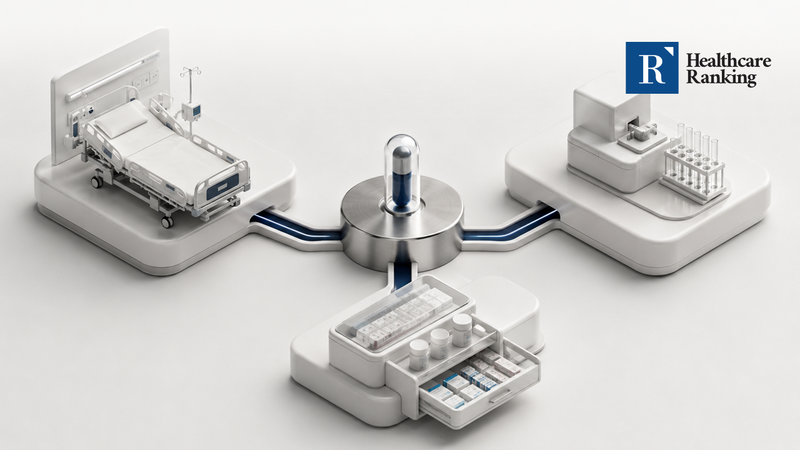
This report forms part of the Ranking News Healthcare Ranking series, which evaluates hospitals, medical institutions, pharmaceutical organizations, medical technology companies, diagnostics providers, laboratories, precision medicine platforms, pharmaceutical services providers, medical technology firms, and healthcare systems across global healthcare markets.
Health data infrastructure and interoperability platforms occupy a critical position in modern healthcare technology. These companies enable hospitals, physician groups, payers, laboratories, digital health companies, life sciences firms, public health organizations, and care-management platforms to exchange, normalize, govern, analyze, and activate health data across fragmented systems.
Unlike conventional EHR vendors or clinical workflow systems, health data infrastructure platforms are evaluated here primarily on their ability to move, connect, standardize, secure, and operationalize healthcare data. Their relevance depends on integration depth, data quality, FHIR and HL7 capability, API infrastructure, patient matching, identity resolution, clinical data normalization, privacy protection, real-time exchange, consent management, analytics readiness, and trust across healthcare stakeholders.
The sector has become more strategically important as healthcare systems shift toward value-based care, population health management, AI-enabled clinical operations, real-world evidence, patient-centered data access, and cross-institutional care coordination. Data fragmentation remains one of the largest barriers to healthcare modernization. Hospitals, payers, digital health firms, and life sciences organizations increasingly need infrastructure that can connect disparate EHRs, claims systems, laboratories, pharmacies, imaging systems, registries, and patient-generated data.
This ranking identifies health data infrastructure and interoperability platforms whose businesses demonstrate sustained relevance across enterprise integration, health information exchange, APIs, real-world data connectivity, data normalization, clinical analytics, and AI-ready health data. Rather than focusing only on EHR market share, the objective is to recognize specific license-targetable firms whose platforms are structurally important to healthcare data movement and digital transformation.
Market Overview
The healthcare interoperability market is expanding as providers, payers, technology firms, and regulators push for more connected health data. One market estimate placed the global healthcare interoperability solutions market at approximately $5.61 billion in 2026, with projected growth to $9.57 billion by 2031, reflecting continued demand for integration, data exchange, and connected clinical workflows.
The market includes several distinct provider types. The first group consists of large enterprise EHR and hospital IT platforms such as Epic, Oracle Health, MEDITECH, and InterSystems. These companies operate at the core of clinical data generation and exchange. Epic’s Care Everywhere is one of the most widely used interoperability networks, with Epic stating that organizations exchange more than 20 million patient records daily through Care Everywhere.
The second group consists of dedicated interoperability infrastructure companies such as Health Gorilla, Redox, Rhapsody, Particle Health, 1upHealth, Zus Health, and Availity. These firms provide APIs, integration engines, data exchange networks, patient record retrieval, FHIR infrastructure, payer-provider connectivity, or developer-oriented health data services. Health Gorilla is especially notable as a designated Qualified Health Information Network under TEFCA, providing secure access to structured and AI-ready health data.
The third group includes health data platforms serving value-based care, analytics, population health, and enterprise transformation. Innovaccer, Health Catalyst, Arcadia, PointClickCare, Veradigm, athenahealth, and NextGen Healthcare all play roles in aggregating data across care settings and turning it into operational intelligence. Innovaccer, for example, positions itself around unifying patient data and delivering point-of-care insights across disparate EHRs and provider networks.
The fourth group includes privacy-preserving data connectivity and real-world data platforms such as Datavant. These companies are increasingly important because clinical research, life sciences evidence generation, payer analytics, and population health require patient-level data linkage across fragmented systems while preserving privacy and compliance. Datavant describes itself as a health data platform company focused on making health data secure, accessible, and actionable.
Industry Trend — 2026
The health data infrastructure and interoperability industry in 2026 is shaped by five major trends: TEFCA adoption, FHIR-based APIs, AI-ready data, payer-provider convergence, and privacy-preserving data linkage.
First, TEFCA is becoming an important national interoperability framework in the United States. Qualified Health Information Networks are creating new pathways for secure data exchange across participating healthcare organizations. Health Gorilla’s QHIN designation and live TEFCA operations illustrate how national exchange frameworks are moving from policy into operational infrastructure.
Second, FHIR-based APIs are increasingly central to modern healthcare data exchange. Hospitals, digital health companies, payers, and application developers need more scalable integration methods than traditional point-to-point HL7 interfaces. Redox positions its platform as a reusable API-powered integration layer for EHRs, while Rhapsody supports healthcare integration across standards including API, FHIR, and HL7.
Third, AI-ready data infrastructure is becoming strategically important. Healthcare AI systems require normalized, deduplicated, timely, clinically meaningful data. Interoperability companies are increasingly competing not only on data access, but also on data quality, identity resolution, terminology mapping, governance, and workflow activation. Health Gorilla and Innovaccer both explicitly position their platforms around structured, actionable, and AI-ready healthcare data infrastructure.
Fourth, payer-provider convergence is increasing demand for shared data infrastructure. Value-based care, risk adjustment, care gap closure, prior authorization, quality reporting, and population health all require clinical and claims data to move across organizational boundaries. Companies such as Availity, Datavant, Innovaccer, Arcadia, Health Catalyst, and PointClickCare are relevant because they help connect data across care delivery, payment, and analytics workflows.
Fifth, real-world data linkage and privacy-preserving tokenization are becoming core healthcare infrastructure. Datavant’s collaborations with life sciences and clinical research organizations show how patient-level data connectivity is increasingly used for evidence generation, trial enrichment, and longitudinal patient journey analysis.
Methodology — Core Eligibility Criteria
To ensure structural consistency within the category, organizations considered for this ranking were evaluated based on the following eligibility conditions:
- Operates as a health data infrastructure provider, interoperability platform, health information exchange technology company, integration engine, FHIR API platform, clinical data platform, payer-provider connectivity platform, or healthcare analytics infrastructure provider
- Provides products or services such as EHR integration, FHIR APIs, HL7 interfaces, clinical data exchange, data normalization, patient matching, identity resolution, consent management, real-world data linkage, payer-provider connectivity, population health data infrastructure, or health information exchange
- Maintains meaningful institutional scale through hospital deployments, payer relationships, EHR connectivity, developer adoption, health-system contracts, life sciences partnerships, QHIN participation, or enterprise data platform usage
- Demonstrates relevance in clinical data exchange, value-based care, AI-ready data infrastructure, care coordination, real-world evidence, population health, patient access, or cross-system interoperability
- Represents a specific license-targetable operating organization, rather than a broad ecosystem category, industry association, informal network, academic project, public agency, or generic standards body
Pure consulting firms, standards organizations, public health agencies, patient advocacy groups, academic networks, generic cloud vendors without specific healthcare data infrastructure products, and early-stage startups without sufficient deployment scale were generally excluded.
Methodology — Ranking Factors
Organizations included in the ranking were evaluated using a combination of qualitative and structural considerations rather than short-term valuation alone. Key factors considered include:
- Scale and maturity of health data infrastructure or interoperability platform
- Breadth of EHR, payer, provider, laboratory, pharmacy, and digital health connectivity
- Strength of FHIR, HL7, API, integration engine, and data exchange capabilities
- Data normalization, deduplication, patient matching, terminology mapping, and identity resolution
- Relevance to value-based care, population health, clinical analytics, real-world evidence, and AI-ready data
- Privacy, consent, security, compliance, and governance infrastructure
- Enterprise adoption by hospitals, payers, health systems, life sciences firms, or digital health companies
- Institutional stability, brand reputation, and long-term platform resilience
The objective of the ranking is to identify health data infrastructure and interoperability platforms whose businesses maintain sustained relevance within the global healthcare ecosystem.
The Healthcare Ranking Top 20 Health Data Infrastructure & Interoperability Platforms 2026 ranking evaluates companies based on data exchange capability, enterprise adoption, healthcare connectivity, data quality, API infrastructure, privacy architecture, AI-readiness, and long-term institutional relevance.
The ranking universe consisted of approximately 150 health data infrastructure and interoperability platforms globally, from which 20 organizations were selected for inclusion.
Tier classifications reflect relative institutional positioning within the health data infrastructure and interoperability platform sector and do not represent procurement advice, investment recommendations, regulatory endorsement, or endorsement of any specific software system.
Tier I — Leading Global Health Data Infrastructure & Interoperability Platforms
Epic Systems
- Headquarters: Verona, United States
- Founded: 1979
- Core focus: Enterprise EHR interoperability, Care Everywhere, patient records, clinical data exchange
Epic Systems is one of the most important health data infrastructure companies in the world because its EHR platform sits at the center of clinical data creation and exchange for many major U.S. health systems. While Epic is primarily known as an enterprise EHR vendor, its interoperability infrastructure is structurally important to healthcare data movement.
Epic’s strength lies in installed-base scale. Its customers include large academic medical centers, integrated delivery networks, community hospitals, ambulatory networks, and specialty providers. Because so much clinical data is generated inside Epic environments, Epic’s interoperability tools are central to health data exchange.
Care Everywhere is especially important. Epic states that organizations use Care Everywhere to exchange more than 20 million patient records daily, and that roughly half of those exchanges are with organizations using a different interoperable EHR. This gives Epic one of the most consequential exchange networks in healthcare.
Epic’s role is also controversial. Its platform control, competitive posture, and interoperability practices are often debated across the industry. However, from a ranking perspective, its infrastructure scale, patient portal reach, data exchange volume, EHR market position, and embedded clinical workflow relevance support its Tier I position.
Oracle Health
- Headquarters: Austin, United States
- Founded: Cerner founded 1979; acquired by Oracle in 2022
- Core focus: Enterprise EHR data infrastructure, cloud healthcare systems, clinical data platforms, interoperability
Oracle Health is one of the most important enterprise health data infrastructure platforms, built around the former Cerner business and Oracle’s cloud, database, analytics, and enterprise software capabilities. Its platform remains deeply relevant in hospitals, government healthcare programs, and international health systems.
Oracle Health’s strength lies in its combination of legacy EHR footprint and enterprise technology infrastructure. Cerner historically served large hospitals, health systems, government clients, and international providers. Oracle’s acquisition added cloud infrastructure, AI strategy, enterprise data management, and database technology to that installed base.
The company remains strategically important despite market-share pressure and customer transitions. Oracle acquired Cerner for $28.3 billion, making healthcare a major part of its enterprise software strategy. Its future relevance depends on whether Oracle can modernize the platform around cloud-native health data architecture, AI-enabled workflows, and more seamless interoperability.
Oracle Health’s hospital footprint, government relevance, cloud capabilities, clinical data infrastructure, and long-term enterprise software backing support its Tier I position.
InterSystems
- Headquarters: Cambridge, United States
- Founded: 1978
- Core focus: Healthcare data platforms, interoperability, HealthShare, TrakCare, FHIR and integration infrastructure
InterSystems is one of the most important healthcare data infrastructure and interoperability companies globally. Its platforms include HealthShare, TrakCare, and IRIS for Health, supporting health information exchange, clinical data repositories, interoperability, analytics, and international EHR deployments.
InterSystems’ strength lies in data architecture rather than only front-end clinical workflow. Many hospitals and health systems need to connect data across EHRs, laboratories, imaging systems, claims systems, public health programs, registries, and regional networks. InterSystems provides infrastructure for these complex environments.
The company is especially relevant internationally, where national health systems, regional exchange networks, and large provider groups often require longitudinal patient records and cross-organizational data exchange. Its technology supports interoperability across multiple vendors and care settings.
InterSystems’ long operating history, healthcare-specific database technology, HealthShare interoperability platform, international deployments, and data infrastructure depth support its position among the leading global platforms.
Health Gorilla
- Headquarters: Mountain View, United States
- Founded: 2014
- Core focus: Health information exchange, TEFCA QHIN, clinical data APIs, AI-ready health data
Health Gorilla is one of the most important dedicated healthcare interoperability platforms in the United States. The company provides health information exchange, clinical data APIs, patient record access, data normalization, and AI-ready health data infrastructure for EHR vendors, digital health companies, value-based care organizations, and healthcare innovators.
Health Gorilla’s strength lies in its position as a designated Qualified Health Information Network under TEFCA. This gives the company direct relevance to the evolving national interoperability framework in the United States. Health Gorilla describes itself as delivering secure, real-time access to deduplicated and AI-ready health data.
The company is also increasingly relevant as EHR vendors and healthcare platforms seek external interoperability partners. Its partnership with Altera Digital Health, for example, was announced to accelerate interoperability by using Health Gorilla’s QHIN and data exchange infrastructure.
Health Gorilla’s QHIN status, API infrastructure, structured health data focus, EHR vendor partnerships, and AI-ready positioning support its Tier I position.
Microsoft Health & Nuance
- Headquarters: Redmond, United States
- Founded: Microsoft founded 1975; Nuance founded 1992
- Core focus: Healthcare cloud, clinical data infrastructure, AI workflow, ambient documentation, interoperability enablement
Microsoft Health and Nuance have become increasingly important in health data infrastructure because hospitals, providers, and digital health companies rely on secure cloud infrastructure, AI tooling, clinical documentation systems, enterprise identity, and data platforms to modernize healthcare workflows.
Microsoft’s strength lies in enterprise infrastructure. While it is not a healthcare-only interoperability vendor, Microsoft Cloud for Healthcare, Azure Health Data Services, Nuance DAX, and healthcare AI tools position it as a major infrastructure provider for clinical data, documentation, analytics, and workflow automation.
Nuance adds clinical workflow depth through speech recognition and ambient documentation. This matters for interoperability because structured and usable clinical data begins with how information is captured, summarized, and integrated into EHR workflows.
Microsoft Health & Nuance’s cloud infrastructure, AI documentation capabilities, enterprise trust, healthcare data services, and integration with hospital technology ecosystems support its position among leading health data infrastructure platforms.
Tier II — Established Health Data Infrastructure & Interoperability Platforms
(Alphabetical order)
athenahealth
- Headquarters: Boston, United States
- Founded: 1997
- Core focus: Ambulatory EHR, cloud healthcare network, payer connectivity, practice data infrastructure
athenahealth is a major cloud-based ambulatory EHR and healthcare network platform. Its infrastructure supports physician practices, medical groups, outpatient providers, billing workflows, patient engagement, payer connectivity, and clinical data exchange.
athenahealth’s strength lies in its networked cloud model. Because it serves many ambulatory practices through a shared cloud infrastructure, it can support connectivity, claims workflows, patient communication, and clinical data operations at scale.
The company is especially relevant in outpatient care, where much of the healthcare system’s data fragmentation occurs. Ambulatory providers need EHR connectivity, payer workflows, patient portals, lab integrations, prescription exchange, and referral coordination.
athenahealth’s ambulatory footprint, cloud infrastructure, payer-provider connectivity, and practice workflow integration support its inclusion among established health data platforms.
Datavant
- Headquarters: San Francisco, United States
- Founded: 2017
- Core focus: Privacy-preserving data linkage, tokenization, real-world data, clinical research data infrastructure
Datavant is one of the most important health data infrastructure companies in privacy-preserving data linkage and real-world data connectivity. Its platform supports secure linkage of patient-level data across clinical, claims, registry, laboratory, life sciences, and research datasets.
Datavant’s strength lies in privacy-preserving tokenization. Healthcare organizations often need to connect data across sources without exposing identifiable information. Datavant’s infrastructure enables longitudinal patient journey analysis, real-world evidence generation, trial enrichment, and data connectivity while preserving privacy.
The company has built a large ecosystem of data partners. Datavant has referenced a health data ecosystem spanning hundreds of real-world data partners, and recent collaboration materials with Thermo Fisher described connectivity across 350-plus real-world data partners and 80,000 U.S. hospitals and clinics.
Datavant’s privacy architecture, real-world data network, life sciences relevance, and patient-level data connectivity support its inclusion among established platforms.
Health Catalyst
- Headquarters: South Jordan, United States
- Founded: 2008
- Core focus: Healthcare data analytics, population health, clinical improvement, enterprise data infrastructure
Health Catalyst is a healthcare data and analytics infrastructure company serving health systems, payers, and care organizations. Its platform supports data warehousing, population health analytics, clinical improvement, financial performance, quality measurement, and operational intelligence.
Health Catalyst’s strength lies in turning fragmented healthcare data into actionable analytics. Hospitals and health systems often struggle to combine clinical, financial, operational, claims, and quality data into a usable enterprise data layer. Health Catalyst addresses this need.
The company is particularly relevant for population health, quality improvement, value-based care, and system-wide performance management. Its analytics platform helps organizations move from raw data to clinical and operational insight.
Health Catalyst’s enterprise analytics infrastructure, health-system customer base, population health relevance, and clinical improvement orientation support its inclusion among established health data platforms.
Infor Healthcare
- Headquarters: New York, United States
- Founded: Infor founded 2002
- Core focus: Healthcare integration, Cloverleaf interoperability, ERP, workforce, supply-chain and hospital operations data
Infor Healthcare is an enterprise software and interoperability provider with relevance across hospital operations, integration infrastructure, workforce management, supply chain, financial systems, and healthcare data exchange. Its Cloverleaf integration engine remains a recognized platform in healthcare interoperability.
Infor’s strength lies in operational data infrastructure. Hospitals do not only need clinical interoperability; they also need data movement across finance, supply chain, HR, workforce, clinical systems, laboratories, and administrative operations.
Cloverleaf has historically been used by healthcare organizations to connect disparate systems, exchange messages, and manage interface workflows. This makes Infor relevant within the integration engine and hospital data infrastructure landscape.
Infor Healthcare’s enterprise software base, Cloverleaf interoperability platform, hospital operations relevance, and integration history support its inclusion among established providers.
Innovaccer
- Headquarters: San Francisco, United States
- Founded: 2014
- Core focus: Healthcare data activation, value-based care, population health, AI-enabled healthcare cloud
Innovaccer is one of the most important healthcare data activation platforms, focused on unifying patient data across systems and using that data to support value-based care, patient engagement, population health, administrative automation, and AI-enabled workflows.
Innovaccer’s strength lies in connecting data infrastructure with operational use cases. It is not only an integration layer; it aims to turn connected data into point-of-care insights, care gap closure, patient engagement, and provider workflow support. The company describes its platform as activating the flow of healthcare data for providers, payers, and government organizations.
The company has also attracted substantial private capital. Innovaccer raised $275 million in Series F funding to build out AI and cloud capabilities, and reporting indicated the company works with more than 130 large health systems.
Innovaccer’s healthcare data platform, value-based care relevance, AI infrastructure, health-system customer base, and acquisition strategy support its position among established platforms.
NextGen Healthcare
- Headquarters: Atlanta, United States
- Founded: 1974
- Core focus: Ambulatory EHR, interoperability, practice management, population health, patient engagement
NextGen Healthcare is a major ambulatory EHR and healthcare technology provider with significant relevance in data infrastructure and interoperability for physician groups, community health centers, specialty practices, and outpatient care organizations.
NextGen’s strength lies in ambulatory data and practice connectivity. Outpatient care is a major source of healthcare fragmentation, and providers need systems that connect clinical documentation, referrals, claims, labs, patient engagement, quality reporting, and population health workflows.
The company’s interoperability relevance comes from its role in connecting ambulatory providers to broader care ecosystems. It supports EHR data exchange, analytics, and workflow tools that help outpatient organizations participate in value-based care and coordinated care models.
NextGen Healthcare’s ambulatory footprint, practice data infrastructure, population health tools, and interoperability relevance support its inclusion among established platforms.
PointClickCare
- Headquarters: Mississauga, Canada
- Founded: 1995
- Core focus: Post-acute care data infrastructure, long-term care EHR, care transitions, real-time clinical insights
PointClickCare is one of the most important health data infrastructure platforms in post-acute care, senior care, skilled nursing, and long-term care. Its software connects care providers across settings and supports clinical documentation, care coordination, analytics, and transitions of care.
PointClickCare’s strength lies in a historically underconnected segment of healthcare. Hospitals, post-acute facilities, payers, and risk-bearing organizations need better visibility into patient status after discharge. Post-acute data is critical for reducing readmissions, managing care transitions, and supporting value-based care.
The company’s network and data platform give it relevance beyond facility software. It supports interoperability between acute and post-acute care, helping health systems and payers understand patient movement and risk across care settings.
PointClickCare’s post-acute footprint, care transition data, long-term care infrastructure, and network relevance support its inclusion among established platforms.
Redox
- Headquarters: Madison, United States
- Founded: 2014
- Core focus: Healthcare APIs, EHR integration, interoperability infrastructure, developer platform
Redox is one of the leading dedicated healthcare interoperability companies, focused on APIs, EHR integration, and scalable healthcare data exchange for digital health companies, providers, payers, and technology platforms.
Redox’s strength lies in developer-oriented healthcare integration. Healthcare startups and enterprise technology teams often face major barriers connecting to EHRs and legacy clinical systems. Redox provides a reusable integration layer designed to reduce the complexity of EHR connectivity and data transformation.
The company continues to expand its platform. Redox announced an evolution of its core integration platform, Redox Engine, in 2025 to power smarter interoperability workflows. Its role is particularly important for digital health companies that need to connect with health systems without building bespoke interfaces for every customer.
Redox’s API infrastructure, EHR connectivity, developer orientation, and interoperability specialization support its inclusion among established health data platforms.
Rhapsody
- Headquarters: Boston, United States
- Founded: Rhapsody platform heritage dates to 1990s integration technology
- Core focus: Integration engine, healthcare interoperability, FHIR, HL7, public health data exchange
Rhapsody is one of the most established healthcare interoperability and integration engine providers. Its platforms support hospitals, health systems, public health agencies, laboratories, payers, and digital health organizations that need to exchange data across complex healthcare environments.
Rhapsody’s strength lies in interface and integration depth. Healthcare organizations still depend heavily on HL7, FHIR, APIs, X12, CDA, and other messaging standards. Rhapsody provides integration infrastructure for these complex environments, helping data move between systems reliably.
The company’s reputation is reinforced by KLAS recognition. Rhapsody announced that it earned the Best in KLAS Integration Engine award for the 16th consecutive year in the 2025 Best in KLAS report.
Rhapsody’s integration engine leadership, standards support, public health relevance, global customer base, and long operating history support its inclusion among established platforms.
Veradigm
- Headquarters: Chicago, United States
- Founded: Allscripts heritage dates to 1986
- Core focus: Ambulatory EHR data, payer-provider connectivity, clinical data platforms, life sciences data
Veradigm is a healthcare data and technology company built on Allscripts’ ambulatory and clinical data assets. Its platform supports provider workflows, payer-provider connectivity, life sciences data, analytics, and clinical insights.
Veradigm’s strength lies in its outpatient clinical data network and payer-provider connectivity. The company operates at the intersection of ambulatory EHR, healthcare analytics, and life sciences data infrastructure. This makes it relevant for clinical research, patient engagement, quality programs, and real-world evidence.
The company has faced public-market and reporting challenges, but its installed base and data assets remain meaningful. It remains a specific license-targetable health data organization with recognized industry presence.
Veradigm’s ambulatory data platform, clinical network assets, payer-provider connectivity, and life sciences relevance support its inclusion among established health data infrastructure providers.
Tier III — Specialist Health Data Infrastructure & Interoperability Platforms
(Alphabetical order)
1upHealth
- Headquarters: Boston, United States
- Founded: 2017
- Core focus: FHIR APIs, payer data infrastructure, CMS interoperability compliance, healthcare data exchange
1upHealth is a specialist health data infrastructure company focused on FHIR APIs, payer interoperability, CMS compliance, and healthcare data exchange. Its platform helps payers and healthcare organizations connect, manage, and share health data using modern interoperability standards.
1upHealth’s strength lies in payer-oriented FHIR infrastructure. Regulatory requirements around patient access APIs, payer-to-payer data exchange, and interoperability have created demand for platforms that can implement and operate standards-based healthcare data services.
The company is smaller than broad enterprise vendors, but its focused API and payer interoperability model makes it a relevant specialist platform.
Arcadia
- Headquarters: Boston, United States
- Founded: 2002
- Core focus: Population health data platform, value-based care analytics, care management infrastructure
Arcadia is a specialist healthcare data platform focused on population health, value-based care, analytics, care management, and data aggregation. It supports health systems, payers, accountable care organizations, and risk-bearing providers that need to turn clinical and claims data into actionable performance insights.
Arcadia’s strength lies in value-based care data infrastructure. Organizations managing risk need accurate data for attribution, care gaps, quality measures, utilization, cost, and patient stratification. Arcadia provides tools to support these workflows.
Its population health focus, risk-based care relevance, and analytics infrastructure support its inclusion among specialist platforms.
Availity
- Headquarters: Jacksonville, United States
- Founded: 2001
- Core focus: Payer-provider connectivity, revenue cycle data exchange, prior authorization, clinical and administrative transactions
Availity is one of the most important payer-provider connectivity platforms in the United States. Its network supports eligibility, claims, prior authorization, payment, clinical documentation exchange, and administrative data workflows between health plans and providers.
Availity’s strength lies in healthcare transaction infrastructure. While many interoperability discussions focus on clinical records, administrative and financial interoperability are equally important to healthcare operations. Providers and payers need reliable exchange of eligibility, authorization, claims, and documentation data.
The company’s acquisition of Diameter Health strengthened its clinical data quality and normalization capabilities, increasing Availity’s relevance beyond administrative transactions.
Availity’s payer-provider network, transaction infrastructure, prior authorization relevance, and clinical data quality capabilities support its Tier III inclusion.
Particle Health
- Headquarters: New York, United States
- Founded: 2018
- Core focus: Patient record retrieval, health data APIs, interoperability, data activation for digital health and EHR vendors
Particle Health is a specialist healthcare interoperability company focused on API-based access to patient medical records and health data exchange. Its platform supports digital health companies, EHR vendors, care organizations, and healthcare technology firms that need clinical data access.
Particle’s strength lies in developer-oriented record retrieval and data activation. The company has pledged support for CMS interoperability initiatives and has launched products aimed at helping EHR and platform vendors access and exchange patient data more easily.
Particle Health has also been involved in industry disputes around data access and appropriate use, reflecting the growing importance and sensitivity of nationwide healthcare data exchange.
Particle Health’s API model, patient-record access infrastructure, EHR vendor relevance, and digital health connectivity support its inclusion among specialist platforms.
Zus Health
- Headquarters: Boston, United States
- Founded: 2020
- Core focus: Shared health data platform, patient profiles, digital health infrastructure, clinical data aggregation
Zus Health is a specialist health data infrastructure company focused on building shared patient profiles and reusable data infrastructure for digital health companies and care delivery organizations. Its platform helps healthcare builders aggregate, organize, and activate patient data across sources.
Zus’ strength lies in serving healthcare builders. Many digital health companies need access to patient history, medication data, care summaries, clinical events, and record retrieval infrastructure, but they do not want to build this foundation from scratch. Zus provides a shared infrastructure layer designed for this market.
The company is smaller than enterprise EHR and data network leaders, but its focused role in digital health infrastructure makes it a relevant specialist platform.
Remarks
Health data infrastructure and interoperability platforms continue to serve as the connective tissue of modern healthcare. Their role extends beyond simple data exchange into data normalization, identity resolution, clinical context, payer-provider connectivity, AI-readiness, privacy-preserving linkage, value-based care analytics, and real-world evidence generation.
The organizations recognized in this ranking represent firms whose platforms maintain sustained relevance across EHR interoperability, APIs, health information exchange, clinical data activation, population health, payer-provider transactions, real-world data linkage, and AI-ready healthcare infrastructure. Tier classification reflects relative institutional positioning within the health data infrastructure and interoperability platform sector rather than direct software quality rankings.
Tier classification reflects relative connectivity scale, standards support, clinical and administrative data depth, enterprise adoption, data quality, privacy architecture, API maturity, workflow activation, and long-term platform resilience. The ranking does not constitute a procurement recommendation, investment recommendation, regulatory endorsement, or endorsement of any specific software system.
Recognition
Organizations included in the Top 20 Health Data Infrastructure & Interoperability Platforms 2026 ranking may request information regarding authorized use of the Ranking News designation for marketing and communications purposes.
Recognized institutions may reference the designation in:
- corporate websites
- investor communications
- marketing materials
- institutional presentations
- academic and recruitment materials
Ranking inclusion is editorially determined and independent of licensing, advertising, or commercial participation. Recognition-materials licenses govern only the use of official Ranking News / Healthcare Ranking assets, approved wording, and related communications materials.
Licensing inquiries:
[email protected]
Review categories
- Medical Device Manufacturers
- Surgical Robotics & Advanced Equipment Firms
- Digital Health Platforms
- Telemedicine Providers
- Remote Monitoring & Wearable Health Technology Providers
- Clinical Workflow & Hospital IT Systems
- Health Data Infrastructure & Interoperability Platforms
- Digital Therapeutics & Consumer Health Technology Providers
[email protected]