Top 20 Surgical Robotics & Advanced Equipment Firms 2026

Review categories
- Medical Device Manufacturers
- Surgical Robotics & Advanced Equipment Firms
- Digital Health Platforms
- Telemedicine Providers
- Remote Monitoring & Wearable Health Technology Providers
- Clinical Workflow & Hospital IT Systems
- Health Data Infrastructure & Interoperability Platforms
- Digital Therapeutics & Consumer Health Technology Providers
[email protected]
Authored On
Modified
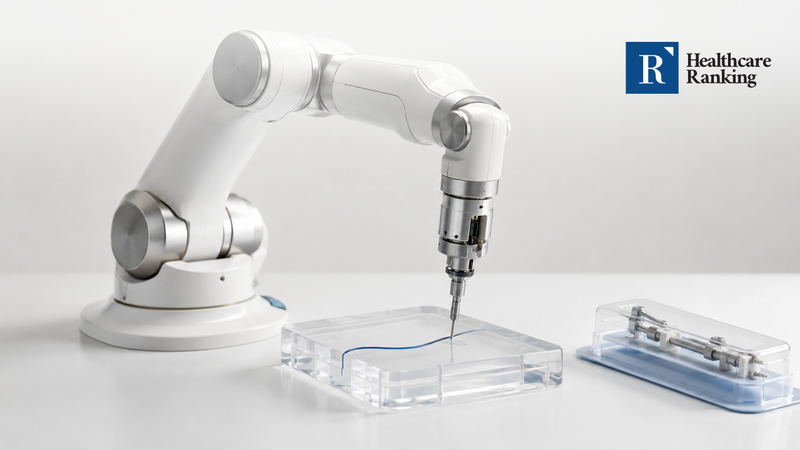
This report forms part of the Ranking News Healthcare Ranking series, which evaluates hospitals, medical institutions, pharmaceutical organizations, medical technology companies, diagnostics providers, laboratories, precision medicine platforms, pharmaceutical services providers, medical technology firms, and healthcare systems across global healthcare markets.
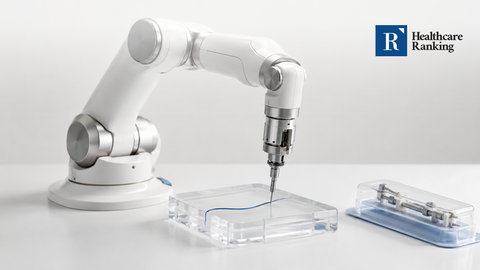
Surgical robotics and advanced equipment firms occupy one of the most strategically important segments of medical technology. These companies develop the robotic systems, digitally enabled surgical platforms, orthopedic navigation systems, endoscopic technologies, neurosurgical planning tools, image-guided intervention systems, operating room equipment, and advanced procedural devices that are reshaping modern surgery.
Unlike conventional device manufacturers focused primarily on implants or consumables, surgical robotics and advanced equipment firms compete through integrated platforms. Their value depends on robotic hardware, software, imaging integration, surgeon training, procedural workflow, instrument ecosystems, service contracts, clinical data, hospital adoption, and long-term installed-base economics. The strongest firms do not merely sell equipment; they create operating-room ecosystems around surgeons, hospitals, and procedure-specific workflows.
The sector is expanding as hospitals seek more precise, less invasive, digitally supported, and reproducible surgical care. Robotic-assisted surgery has moved from urology and gynecology into general surgery, thoracic surgery, colorectal surgery, orthopedics, spine, neurosurgery, bronchoscopy, interventional cardiology, and image-guided procedures. At the same time, advanced equipment platforms in navigation, visualization, endoscopy, intraoperative imaging, and surgical planning remain essential to procedural modernization.
This ranking identifies surgical robotics and advanced equipment firms whose platforms demonstrate sustained relevance across robotic surgery, orthopedic robotics, neurosurgical systems, image-guided intervention, advanced visualization, navigation, operating-room integration, and digitally enabled procedural care. Rather than focusing only on robot installations or revenue scale, the objective is to recognize firms whose technologies are structurally important to the future of surgery.
Market Overview
The surgical robotics and advanced equipment market remains led by Intuitive Surgical, whose da Vinci platform continues to define soft-tissue robotic surgery globally. Intuitive reported strong 2025 system placement momentum, including 532 da Vinci system placements in the fourth quarter of 2025, of which 303 were da Vinci 5 systems, compared with 493 total placements in the fourth quarter of 2024.
Competition is intensifying. Medtronic’s Hugo robotic-assisted surgery system received U.S. FDA clearance for urologic surgical procedures in December 2025, bringing a major diversified medtech company more directly into the U.S. soft-tissue robotics market. Johnson & Johnson MedTech’s Ottava robotic surgical system also advanced through clinical development, with recent reports stating that its first clinical study met primary endpoints in bariatric surgery.
Orthopedic robotics remains another major growth category. Stryker’s Mako SmartRobotics platform has been deployed across hip, knee, spine, and shoulder procedure development, and Stryker reported that Mako had supported more than 1.5 million procedures globally across 45 countries as of its 2025 AAOS update. Zimmer Biomet’s ROSA Robotics platform, Smith+Nephew’s CORI system, Globus Medical’s ExcelsiusGPS and spine-enabling technologies, and Medtronic’s Mazor robotics platform all reflect the continued convergence of implants, navigation, planning, and robotic execution in musculoskeletal surgery.
The market also includes fast-growing specialist firms. CMR Surgical’s Versius system received U.S. FDA marketing authorization for cholecystectomy, and the company has reported significant global procedure experience outside the United States. KARL STORZ acquired Asensus Surgical in 2024 to create a surgical robotics hub and advance performance-guided surgery, demonstrating that traditional surgical visualization firms are also moving into robotic and digital surgery.
Industry Trend — 2026
The surgical robotics and advanced equipment industry in 2026 is shaped by five major trends: soft-tissue robotics competition, orthopedic robotic expansion, image-guided intervention, digital operating room integration, and installed-base economics.
First, the soft-tissue robotics market is becoming more competitive. Intuitive remains the clear market leader, but Medtronic, Johnson & Johnson, CMR Surgical, and KARL STORZ / Asensus are all pursuing systems designed to give hospitals more choice in robotic-assisted minimally invasive surgery. FDA clearances, clinical trials, surgeon training, and U.S. commercialization will be decisive in determining whether these challengers can move beyond early adoption into scaled hospital deployment.
Second, orthopedic robotics is becoming increasingly integrated into implant strategy. Stryker, Zimmer Biomet, Smith+Nephew, Globus Medical, and Medtronic use robotics, navigation, and planning tools to strengthen surgeon loyalty around implants and procedural ecosystems. In orthopedics, the robot is often not just a standalone capital purchase; it becomes part of a broader system involving implants, planning software, instruments, and data-driven surgical workflows.
Third, image-guided and navigation-based surgery remains central. Advanced equipment firms such as Siemens Healthineers, Brainlab, Medtronic, Globus Medical, Stryker, ZEISS, and Leica Microsystems support surgical accuracy through intraoperative imaging, navigation, microscopy, robotics, and digital visualization. These technologies are especially important in neurosurgery, spine surgery, ENT, vascular intervention, oncology surgery, and complex reconstructive procedures.
Fourth, the operating room is becoming more digital. Surgical robotics platforms increasingly include procedure analytics, remote support, video integration, workflow dashboards, training tools, and data capture. CMR’s newer Versius platform, for example, includes digital tools such as procedure logging and team-facing dashboards to support utilization and efficiency tracking.
Fifth, installed-base economics matter. Robotic systems create recurring revenue through instruments, accessories, service, training, software, and procedure volume. The strongest firms are those able to build durable ecosystems rather than one-time equipment sales.
Methodology — Core Eligibility Criteria
To ensure structural consistency within the category, organizations considered for this ranking were evaluated based on the following eligibility conditions:
- Operates as a surgical robotics, advanced surgical equipment, image-guided surgery, orthopedic robotics, neurosurgical navigation, endoscopy, surgical visualization, or operating-room technology firm
- Provides products such as robotic surgical systems, orthopedic robotic platforms, surgical navigation systems, intraoperative imaging, endoscopic systems, robotic bronchoscopy, surgical microscopes, advanced energy devices, or digitally enabled operating-room equipment
- Maintains meaningful institutional scale through regulatory approvals, commercial installations, procedure volume, hospital adoption, surgeon training, global distribution, or installed equipment platforms
- Demonstrates relevance in soft-tissue surgery, orthopedics, spine, neurosurgery, minimally invasive surgery, interventional procedures, surgical planning, or operating-room infrastructure
- Represents a specific license-targetable operating organization, rather than a broad platform category, trade association, informal network, or industry group
Software-only vendors without meaningful surgical equipment deployment, early-stage robotics concepts without clinical or regulatory maturity, contract manufacturers without branded surgical technology platforms, and broad medical device companies without meaningful surgical robotics or advanced equipment relevance were generally excluded.
Methodology — Ranking Factors
Organizations included in the ranking were evaluated using a combination of qualitative and structural considerations rather than short-term market capitalization alone. Key factors considered include:
- Strength and maturity of surgical robotics or advanced equipment platform
- Clinical adoption, installed base, and procedure volume
- Regulatory clearance, clinical evidence, and surgeon adoption
- Breadth of surgical specialties supported
- Integration with imaging, navigation, planning, implants, instruments, and digital workflows
- Hospital purchasing relevance, service infrastructure, and training ecosystem
- Recurring revenue potential through instruments, software, service, and consumables
- Institutional stability, brand reputation, and long-term platform resilience
The objective of the ranking is to identify surgical robotics and advanced equipment firms whose platforms maintain sustained relevance within global healthcare.
The Healthcare Ranking Top 20 Surgical Robotics & Advanced Equipment Firms 2026 ranking evaluates companies based on robotic surgery leadership, advanced procedural equipment capability, clinical adoption, hospital relevance, regulatory execution, and long-term institutional resilience.
The ranking universe consisted of approximately 120 surgical robotics and advanced surgical equipment firms globally, from which 20 organizations were selected for inclusion.
Tier classifications reflect relative institutional positioning within the surgical robotics and advanced equipment sector and do not represent clinical recommendations, procurement advice, investment recommendations, or endorsement of any specific surgical system.
Tier I — Leading Global Surgical Robotics & Advanced Equipment Firms
Intuitive Surgical
- Headquarters: Sunnyvale, United States
- Founded: 1995
- Core focus: Robotic-assisted surgery, minimally invasive surgery, da Vinci surgical systems, Ion robotic bronchoscopy
Intuitive Surgical remains the defining company in surgical robotics and the clear global benchmark for robotic-assisted soft-tissue surgery. Its da Vinci platform has shaped robotic surgery adoption across urology, gynecology, general surgery, thoracic surgery, colorectal surgery, and other minimally invasive procedures.
Intuitive’s strength lies in its installed-base ecosystem. The company combines robotic systems, instruments, accessories, service contracts, surgeon training, procedure development, digital tools, and clinical support into a deeply embedded hospital platform. This makes Intuitive more than a device vendor; it is an operating-room infrastructure company with recurring procedure-linked revenue.
The launch and expansion of da Vinci 5 reinforce Intuitive’s leadership position. The company reported strong 2025 system placement momentum, including significant da Vinci 5 placements, indicating continued demand from hospitals upgrading and expanding robotic programs. Its Ion robotic bronchoscopy platform also extends Intuitive’s presence into minimally invasive lung biopsy and pulmonary procedures.
Despite growing competition from Medtronic, Johnson & Johnson, CMR Surgical, and others, Intuitive’s installed base, clinical familiarity, surgeon loyalty, procedure volume, regulatory experience, and global service infrastructure support its position as the Tier I leader in surgical robotics.
Stryker
- Headquarters: Kalamazoo, United States
- Founded: 1941
- Core focus: Orthopedic robotics, Mako SmartRobotics, surgical equipment, neurotechnology, orthopedic implants
Stryker is one of the most important surgical robotics and advanced equipment firms globally, especially in orthopedic robotic surgery. Its Mako SmartRobotics platform is deeply integrated with hip, knee, and broader musculoskeletal procedural workflows, strengthening Stryker’s position in joint replacement and orthopedic surgery.
Stryker’s strength lies in linking robotics to implants. Orthopedic robotics is highly valuable when it supports implant planning, bone preparation, alignment, soft-tissue balancing, and reproducible surgical execution. Mako supports this ecosystem by connecting procedure planning with Stryker’s orthopedic implant portfolio and surgeon training infrastructure.
The company has continued to expand the Mako platform across more orthopedic applications. Stryker’s AAOS 2025 update highlighted next-generation Mako developments across hip, knee, spine, and shoulder procedures, and reported more than 1.5 million Mako procedures globally across 45 countries.
Stryker’s orthopedic robotics leadership, implant ecosystem, surgical equipment portfolio, commercial execution, and hospital relationships support its Tier I position in surgical robotics and advanced equipment.
Medtronic
- Headquarters: Dublin, Ireland / Operational headquarters: Minneapolis, United States
- Founded: 1949
- Core focus: Robotic-assisted surgery, spine robotics, neurosurgery, surgical navigation, advanced procedural equipment
Medtronic is one of the most strategically important firms in surgical robotics and advanced procedural technology. Its platform spans the Hugo robotic-assisted surgery system, Mazor spine robotics, surgical navigation, neurosurgical equipment, advanced energy devices, stapling, ENT technologies, and broader operating-room infrastructure.
Medtronic’s strength lies in breadth. The company is not focused on one robot alone; it participates across soft-tissue robotics, spine robotics, surgical instruments, navigation, neuromodulation, and procedural systems. This gives Medtronic multiple entry points into hospital surgical programs.
The Hugo robotic-assisted surgery system’s U.S. FDA clearance for urologic surgical procedures in December 2025 marked an important milestone, allowing Medtronic to compete more directly in the U.S. soft-tissue robotic surgery market. The company’s existing spine and neurosurgical platforms also give it a strong position in robotics-enabled procedural care outside abdominal soft-tissue surgery.
Medtronic’s global scale, surgical technology portfolio, regulatory progress with Hugo, spine robotics, and hospital relationships support its position among the leading global firms in this category.
Johnson & Johnson MedTech
- Headquarters: New Brunswick, United States
- Founded: Johnson & Johnson founded 1886
- Core focus: Robotic surgery, digital surgery, surgical instruments, orthopedics, cardiovascular intervention
Johnson & Johnson MedTech is a major global surgical technology firm with strategic ambitions in robotic surgery, digital surgery, advanced instruments, orthopedics, electrophysiology, cardiovascular intervention, and surgical platforms. Its Ottava robotic surgical system is one of the most closely watched challenger platforms in soft-tissue robotics.
J&J MedTech’s strength lies in its existing surgical footprint. Through Ethicon, DePuy Synthes, Biosense Webster, Abiomed, and other businesses, the company maintains deep surgeon relationships, operating-room access, and procedural training capabilities. These assets are highly relevant as it seeks to expand further into robotic and digitally enabled surgery.
The Ottava platform has moved through clinical development, with J&J announcing FDA investigational device exemption approval in 2024 and recent reports stating that its clinical bariatric surgery study met primary endpoints. While Ottava remains behind Intuitive in commercial maturity, J&J’s scale, surgical relationships, and capital resources make it a serious long-term competitor.
Johnson & Johnson MedTech’s broad surgical portfolio, digital surgery ambition, robotic development progress, and global commercial reach support its Tier I position.
Zimmer Biomet
- Headquarters: Warsaw, United States
- Founded: 1927 / Zimmer Biomet formed 2015
- Core focus: Orthopedic robotics, ROSA Robotics, joint replacement, spine, musculoskeletal surgery
Zimmer Biomet is one of the leading orthopedic technology firms globally and a major participant in robotic-assisted musculoskeletal surgery through its ROSA Robotics platform. The company’s orthopedic implant portfolio, surgeon relationships, and robotic planning systems give it a strong position in joint replacement and related procedures.
Zimmer Biomet’s strength lies in orthopedic specialization. Like Stryker, the company uses robotics not merely as a standalone capital product but as part of a broader musculoskeletal ecosystem involving implants, surgical planning, instruments, and surgeon training. ROSA supports knee, hip, and other orthopedic applications, helping strengthen Zimmer Biomet’s procedural platform.
The company’s 2025 annual report showed net sales of $8.232 billion, supported by acquisition activity, market growth, and new product introductions, reinforcing its ongoing scale within musculoskeletal medtech.
Zimmer Biomet’s orthopedic implant base, ROSA Robotics platform, surgeon relationships, and musculoskeletal procedure relevance support its position among the leading surgical robotics and advanced equipment firms.
Tier II — Established Surgical Robotics & Advanced Equipment Firms
(Alphabetical order)
Brainlab
- Headquarters: Munich, Germany
- Founded: 1989
- Core focus: Surgical navigation, neurosurgery, radiotherapy planning, image-guided surgery, digital operating room systems
Brainlab is one of the most important advanced surgical equipment firms in image-guided surgery and digital operating-room technology. Its systems support neurosurgery, spine surgery, ENT, cranio-maxillofacial surgery, radiotherapy, and broader surgical navigation workflows.
The company’s strength lies in software-enabled procedural precision. Brainlab platforms help surgeons plan, navigate, visualize, and execute complex procedures using imaging data, tracking systems, and digital workflow tools. This makes the company especially relevant in neurosurgery and spine, where anatomical accuracy and image integration are critical.
Brainlab is not a robotic surgery firm in the same category as Intuitive or Stryker, but its surgical navigation and operating-room technologies are central to advanced procedural care. Its position reflects the fact that surgical innovation depends not only on robotic arms, but also on planning, image guidance, visualization, and workflow integration.
Brainlab’s navigation expertise, neurosurgical relevance, digital operating-room infrastructure, and global specialty adoption support its inclusion among established firms.
CMR Surgical
- Headquarters: Cambridge, United Kingdom
- Founded: 2014
- Core focus: Versius surgical robotics, minimally invasive surgery, soft-tissue robotic platforms
CMR Surgical is one of the most important independent surgical robotics firms and a major challenger in soft-tissue robotic surgery. Its Versius platform is designed to be compact, modular, and adaptable across operating-room environments, with an emphasis on expanding access to robotic-assisted minimally invasive surgery.
CMR’s strength lies in its differentiated system architecture and international adoption. The company’s Versius platform has been used across multiple countries and received U.S. FDA marketing authorization for cholecystectomy, establishing a pathway into the world’s largest surgical robotics market. More recent reports noted that Versius Plus received FDA clearance and that CMR expected commercialization activity in 2026.
The company remains smaller than Intuitive, Medtronic, or Johnson & Johnson, but its specialist focus and global procedure experience make it one of the most credible independent robotics challengers.
CMR Surgical’s Versius platform, regulatory progress, international adoption, and focused robotic surgery identity support its inclusion among established surgical robotics firms.
Globus Medical
- Headquarters: Audubon, United States
- Founded: 2003
- Core focus: Spine surgery, orthopedic technology, ExcelsiusGPS robotics, navigation, musculoskeletal implants
Globus Medical is a major spine and orthopedic technology company with strong relevance in surgical robotics and navigation. Its ExcelsiusGPS platform integrates robotic guidance and navigation for spine surgery and related musculoskeletal procedures.
Globus’ strength lies in combining implants, robotics, navigation, and procedural tools in spine surgery. Spine procedures are technically complex and benefit from preoperative planning, screw placement accuracy, intraoperative navigation, and workflow standardization. ExcelsiusGPS supports this environment by linking digital planning with robotic guidance.
The company’s acquisition of NuVasive expanded its scale in spine and musculoskeletal surgery, strengthening its ability to compete with Medtronic, Stryker, Zimmer Biomet, and other orthopedic and spine technology firms.
Globus Medical’s spine focus, robotic navigation platform, implant ecosystem, and surgeon relationships support its inclusion among established advanced surgical equipment firms.
KARL STORZ
- Headquarters: Tuttlingen, Germany
- Founded: 1945
- Core focus: Endoscopy, surgical visualization, operating-room integration, robotic surgery through Asensus Surgical
KARL STORZ is one of the world’s leading surgical visualization and endoscopy companies, with broad relevance across minimally invasive surgery, operating-room integration, imaging, endoscopic instruments, and digital surgical workflows. Its acquisition of Asensus Surgical added a direct surgical robotics component to its advanced equipment platform.
KARL STORZ’s strength lies in surgical visualization. Robotic and minimally invasive surgery depend on high-quality imaging, endoscopic access, instruments, OR integration, and visualization systems. KARL STORZ has long been embedded in these procedural environments.
The company acquired Asensus Surgical in 2024 to create a surgical robotics hub and advance performance-guided surgery. This acquisition gives KARL STORZ a clearer position in the surgical robotics category while reinforcing its broader digital and endoscopic surgery strategy.
KARL STORZ’s endoscopy leadership, OR integration expertise, acquisition of Asensus, and surgical visualization platform support its inclusion among established firms.
Leica Microsystems
- Headquarters: Wetzlar, Germany
- Founded: 1849
- Core focus: Surgical microscopes, neurosurgical visualization, ophthalmic surgery, microsurgery
Leica Microsystems is a major advanced surgical equipment firm focused on surgical microscopes, optical visualization, neurosurgery, ophthalmology, ENT, plastic and reconstructive surgery, and microsurgical applications. As part of Danaher, Leica benefits from a strong life sciences and medical technology operating environment.
Leica’s strength lies in high-precision visualization. Many complex procedures require magnification, depth perception, fluorescence imaging, ergonomic visualization, and integration with surgical workflows. Neurosurgery, ophthalmology, spine surgery, and microsurgery depend heavily on advanced microscope platforms.
While Leica is not a robotic surgery company, its equipment is central to advanced surgery. Surgical robotics and digital surgery should be understood alongside visualization and image-guided systems, because surgeons rely on these technologies for precision and safety.
Leica Microsystems’ surgical microscope expertise, neurosurgical and ophthalmic relevance, optical technology heritage, and global installed base support its inclusion among established advanced equipment firms.
Medacta International
- Headquarters: Castel San Pietro, Switzerland
- Founded: 1999
- Core focus: Orthopedics, surgical planning, augmented reality, joint replacement, spine surgery
Medacta International is a Swiss orthopedic technology company with relevance in advanced surgical planning, personalized orthopedic procedures, and digitally enabled musculoskeletal surgery. Its technologies support joint replacement, spine surgery, sports medicine, and surgical education.
Medacta’s strength lies in combining implants with planning and enabling technologies. Orthopedic surgery increasingly depends on patient-specific planning, digital workflows, and procedure-support tools that improve reproducibility and surgeon confidence. Medacta has positioned itself around this integrated model.
The company’s MySolutions and NextAR-related technologies give it relevance in augmented reality and personalized orthopedic surgery, even though it is smaller than Stryker, Zimmer Biomet, or Smith+Nephew.
Medacta’s orthopedic specialization, digital planning tools, Swiss engineering profile, and procedure-support technologies support its inclusion among established advanced surgical equipment firms.
Smith+Nephew
- Headquarters: London, United Kingdom
- Founded: 1856
- Core focus: Orthopedics, sports medicine, CORI surgical robotics, wound management, surgical technologies
Smith+Nephew is a major orthopedic and surgical technology company with a meaningful position in robotic-assisted orthopedic surgery through its CORI Surgical System. The company operates across orthopedics, sports medicine, advanced wound management, and surgical technologies.
Smith+Nephew’s strength lies in musculoskeletal procedures and sports medicine. CORI supports robotic-assisted knee surgery and fits into the broader trend of combining implants, planning, robotic guidance, and surgeon workflow tools in orthopedics.
The company is smaller than Stryker and Zimmer Biomet in orthopedic robotics, but it remains a significant global device manufacturer with established surgeon relationships and a broad musculoskeletal care platform.
Smith+Nephew’s CORI robotics platform, orthopedic implant base, sports medicine portfolio, and global surgical technology presence support its inclusion among established firms.
Siemens Healthineers
- Headquarters: Erlangen, Germany
- Founded: 2017 as separately listed company
- Core focus: Image-guided therapy, intraoperative imaging, surgical imaging, radiotherapy, advanced procedural equipment
Siemens Healthineers is a major advanced equipment firm in image-guided intervention, surgical imaging, angiography, intraoperative imaging, radiation oncology, and diagnostic systems. While not primarily a robotic surgery company, it is central to advanced procedural care through imaging and guidance technologies.
The company’s strength lies in integrating imaging with intervention. Modern surgery increasingly depends on preoperative imaging, intraoperative visualization, hybrid operating rooms, angiography systems, and treatment planning. Siemens Healthineers’ platforms are embedded in cardiovascular intervention, neurosurgery, oncology, radiology, and hybrid procedural suites.
Its Varian business adds relevance in radiation oncology and cancer treatment technology, while its angiography and imaging systems support minimally invasive procedural environments.
Siemens Healthineers’ image-guided therapy platform, hospital infrastructure role, intraoperative imaging relevance, and global installed base support its inclusion among established advanced surgical equipment firms.
Smiths Group / Smiths Medical Legacy Surgical and Critical Equipment Platform
- Headquarters: London, United Kingdom
- Founded: 1851
- Core focus: Advanced hospital equipment, infusion, airway, patient support technologies
Smiths Medical was historically an important advanced equipment provider in infusion, airway management, vascular access, and critical care technologies. Although Smiths Medical became part of ICU Medical, the legacy platform remains relevant to hospital and surgical equipment ecosystems through ICU Medical rather than as an independent public medtech company.
For licensing purposes, the appropriate license-targetable operating entity is ICU Medical, not an abstract Smiths platform. ICU Medical’s relevance lies in its role across infusion systems, vascular access, critical care, and perioperative support technologies used around surgical and acute care environments.
The company is included here because advanced surgical care depends not only on robots and navigation systems but also on high-reliability equipment for infusion, anesthesia-adjacent workflows, vascular access, and patient support.
ICU Medical’s critical care equipment base, infusion platform, hospital relationships, and inherited Smiths Medical assets support its position among established advanced equipment firms.
ZEISS Medical Technology
- Headquarters: Jena / Oberkochen, Germany
- Founded: ZEISS founded 1846
- Core focus: Surgical microscopes, ophthalmic surgery, neurosurgery, digital visualization, intraoperative imaging
ZEISS Medical Technology is one of the world’s leading surgical visualization and microsurgery technology firms. Its products support ophthalmology, neurosurgery, ENT, spine, dentistry, and microsurgical applications through surgical microscopes, visualization systems, intraoperative imaging, and digital workflow tools.
ZEISS’ strength lies in precision optics and clinical visualization. In advanced surgery, the quality of visualization can materially affect procedural precision, surgeon confidence, and workflow. ZEISS has built one of the strongest brands in surgical optics and ophthalmic technology.
The company is particularly important in ophthalmic surgery and neurosurgery, where microsurgical visualization is central to outcomes and surgeon adoption. Its digital visualization strategy also supports the broader move toward connected and data-enabled operating rooms.
ZEISS Medical Technology’s optical engineering heritage, surgical microscope leadership, ophthalmology and neurosurgery relevance, and global installed base support its inclusion among established advanced equipment firms.
Tier III — Specialist Surgical Robotics & Advanced Equipment Firms
(Alphabetical order)
Accuray
- Headquarters: Madison, United States
- Founded: 1990
- Core focus: Robotic radiosurgery, radiation oncology systems, CyberKnife, TomoTherapy
Accuray is a specialist advanced equipment firm focused on radiation oncology and robotic radiosurgery. Its CyberKnife system is one of the most recognized robotic radiosurgery platforms, used to deliver precise radiation treatment for selected tumors and lesions.
Accuray’s strength lies in high-precision cancer treatment technology. Although radiosurgery differs from conventional operating-room robotics, it fits within advanced procedural equipment because it combines imaging, robotic positioning, treatment planning, and precise therapeutic delivery.
The company’s focused oncology equipment platform supports its inclusion among specialist surgical robotics and advanced equipment firms.
Corin Group
- Headquarters: Cirencester, United Kingdom
- Founded: 1985
- Core focus: Orthopedic implants, robotic-assisted orthopedics, surgical planning, joint replacement
Corin Group is an orthopedic technology company with relevance in robotic-assisted and digitally enabled joint replacement. Its OMNIBotics platform supports robotic-assisted knee surgery and forms part of Corin’s broader orthopedic implant and planning ecosystem.
Corin’s strength lies in orthopedic specialization and personalized joint replacement workflows. Smaller than Stryker, Zimmer Biomet, and Smith+Nephew, Corin nevertheless remains a license-targetable specialist with a clear robotic and advanced orthopedic equipment identity.
Its orthopedic implant base, robotic-assisted surgery platform, and procedure-specific planning tools support its Tier III inclusion.
eCential Robotics
- Headquarters: Grenoble, France
- Founded: 2009
- Core focus: Spine surgery robotics, surgical navigation, 2D / 3D imaging, robotic guidance
eCential Robotics is a French surgical technology company focused on spine surgery robotics, surgical navigation, and integrated imaging-guidance systems. Its platform combines 2D / 3D imaging, navigation, and robotic assistance for complex musculoskeletal procedures.
The company’s relevance lies in the convergence of imaging and robotic guidance. Spine surgery requires high precision, and integrated imaging-navigation-robotics systems can help standardize workflow and improve implant placement confidence.
eCential Robotics’ specialist spine platform, European engineering base, and integration of imaging with robotics support its inclusion among specialist firms.
Renishaw
- Headquarters: Wotton-under-Edge, United Kingdom
- Founded: 1973
- Core focus: Neurosurgical robotics, stereotactic systems, precision engineering, surgical planning
Renishaw is a precision engineering company with specialist relevance in neurosurgical robotics and stereotactic surgical systems. Its medical technology work includes robotic assistance for neurosurgical procedures requiring high precision.
Renishaw’s strength lies in engineering accuracy. Neurosurgery and stereotactic interventions demand precise targeting, planning, and device control. Renishaw’s broader industrial metrology and precision engineering heritage gives it a distinctive technical foundation.
Although it is not a large general surgical robotics company, its specialist neurosurgical equipment relevance supports its inclusion among Tier III firms.
THINK Surgical
- Headquarters: Fremont, United States
- Founded: 2007
- Core focus: Orthopedic robotics, joint replacement, open-platform robotic surgery
THINK Surgical is a specialist orthopedic robotics company focused on robotic-assisted joint replacement. Its platform is designed to support implant planning and robotic execution in orthopedic surgery, with an emphasis on open-platform compatibility.
The company’s strength lies in offering an alternative orthopedic robotics model. While large orthopedic manufacturers often tie robotics closely to proprietary implant ecosystems, THINK Surgical has positioned itself around broader implant compatibility, which may appeal to hospitals and surgeons seeking flexibility.
Its specialist orthopedic robotics identity, joint replacement focus, and open-platform strategy support its inclusion among specialist surgical robotics firms.
Remarks
Surgical robotics and advanced equipment firms continue to reshape procedural medicine by improving precision, enabling minimally invasive approaches, supporting image-guided intervention, strengthening surgical planning, and digitizing the operating room. The category includes not only robotic soft-tissue systems, but also orthopedic robotics, spine navigation, neurosurgical guidance, endoscopic visualization, surgical microscopy, and advanced procedural infrastructure.
The organizations recognized in this ranking represent firms whose platforms maintain sustained relevance across robotic-assisted surgery, orthopedic robotics, surgical navigation, intraoperative imaging, advanced visualization, endoscopy, image-guided therapy, and operating-room technology. Tier classification reflects relative institutional positioning within the surgical robotics and advanced equipment sector rather than direct clinical quality rankings.
Tier classification reflects relative platform maturity, clinical adoption, regulatory execution, installed base, surgeon training infrastructure, hospital relevance, digital integration, and long-term platform resilience. The ranking does not constitute a medical recommendation, procurement recommendation, investment recommendation, or endorsement of any specific surgical system.
Recognition
Organizations included in the Top 20 Surgical Robotics & Advanced Equipment Firms 2026 ranking may request information regarding authorized use of the Ranking News designation for marketing and communications purposes.
Recognized institutions may reference the designation in:
- corporate websites
- investor communications
- marketing materials
- institutional presentations
- academic and recruitment materials
Ranking inclusion is editorially determined and independent of licensing, advertising, or commercial participation. Recognition-materials licenses govern only the use of official Ranking News / Healthcare Ranking assets, approved wording, and related communications materials.
Licensing inquiries:
[email protected]

Review categories
- Medical Device Manufacturers
- Surgical Robotics & Advanced Equipment Firms
- Digital Health Platforms
- Telemedicine Providers
- Remote Monitoring & Wearable Health Technology Providers
- Clinical Workflow & Hospital IT Systems
- Health Data Infrastructure & Interoperability Platforms
- Digital Therapeutics & Consumer Health Technology Providers
[email protected]