Medical Technology, Digital Health & Care Infrastructure Outlook 2026: AI-Native Care Systems, Surgical Automation, and the Industrialization of Digital Health

Review categories
- Medical Device Manufacturers
- Surgical Robotics & Advanced Equipment Firms
- Digital Health Platforms
- Telemedicine Providers
- Remote Monitoring & Wearable Health Technology Providers
- Clinical Workflow & Hospital IT Systems
- Health Data Infrastructure & Interoperability Platforms
- Digital Therapeutics & Consumer Health Technology Providers
[email protected]
Authored On
Modified
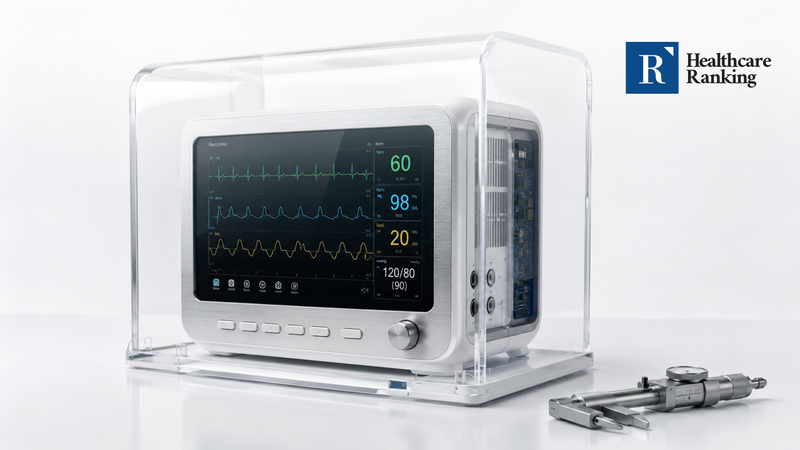
This article is part of Ranking News’ annual industry outlook series, providing market context for the corresponding sector ranking and highlighting the structural forces shaping institutional performance, provider selection, and healthcare delivery.
The Medical Technology, Digital Health & Care Infrastructure industry enters 2026 as one of the most important structural layers of modern healthcare. The sector includes medical device manufacturers, surgical robotics and advanced equipment firms, digital health platforms, telemedicine providers, remote monitoring and wearable health technology providers, hospital workflow systems, health data infrastructure platforms, and digital therapeutics and consumer health technology companies.
The defining theme for 2026 is the movement from innovation pilots to operational infrastructure. Hospitals, clinics, payers, governments, and patients are no longer evaluating medical technology and digital health primarily as optional innovation. They increasingly expect these systems to improve access, workflow, clinical quality, productivity, patient engagement, data sharing, and cost control.
McKinsey’s 2026 healthcare outlook identifies health services and technology as one of the continuing growth areas in healthcare, supported by advances in technology and AI, even as the broader healthcare system faces financial strain. Deloitte’s 2026 U.S. health care outlook similarly emphasizes care delivery transformation, digital experience, technology, prevention, and early detection as strategic priorities, noting that more than 41% of surveyed executives said care delivery transformation would affect organizational strategy in 2026.
Medical technology is also becoming more integrated with data, software, AI, and service models. IQVIA’s 2026 medtech trends outlook highlights AI, real-world evidence, medical device regulation, diagnostics, robotics, and digital health as major themes shaping the sector. Deloitte’s broader life sciences outlook also points to AI, data, and digital transformation as increasingly important to the medtech industry.
For Ranking News, the 2026 outlook suggests that Medical Technology, Digital Health & Care Infrastructure companies should not be evaluated only by product innovation, installed base, or funding momentum. The strongest organizations are likely to be those combining clinical utility, regulatory credibility, workflow integration, interoperability, cybersecurity, real-world evidence, patient adoption, and institutional trust.
Market Overview
Medical Technology, Digital Health & Care Infrastructure sits between clinical care, engineering, software, data systems, and patient engagement. It provides the tools, platforms, devices, and infrastructure that allow healthcare systems to diagnose, treat, monitor, coordinate, and manage patients more effectively.
Medical device manufacturers produce implantable devices, surgical instruments, diagnostic equipment, monitoring devices, consumables, cardiovascular devices, orthopedic implants, neurotechnology systems, diabetes technology, respiratory devices, and hospital equipment. Surgical robotics and advanced equipment firms develop robotic surgery systems, image-guided intervention platforms, advanced imaging equipment, navigation systems, and operating-room technologies.
Digital health platforms support virtual care, chronic disease management, patient engagement, care coordination, digital front doors, scheduling, digital triage, and remote care navigation. Telemedicine providers deliver virtual consultations, specialist access, mental health services, urgent care, chronic care, and cross-border medical access. Remote monitoring and wearable health technology providers support continuous or periodic monitoring of vital signs, cardiac rhythms, glucose, activity, sleep, medication adherence, and disease progression.
Clinical workflow and hospital IT systems include electronic health records, clinical documentation, revenue cycle systems, scheduling, medication management, imaging IT, clinical decision support, and operational analytics. Health data infrastructure and interoperability platforms support data exchange, patient records, APIs, identity management, analytics, privacy, and population health. Digital therapeutics and consumer health technology providers offer software-based interventions, behavior-change programs, disease-management tools, wellness platforms, and patient-facing health applications.
The sector’s common challenge is clinical integration. Technology that works in a demonstration setting may fail inside real healthcare operations if it increases clinician burden, fragments data, lacks reimbursement, cannot integrate with existing systems, or fails to demonstrate measurable value. In 2026, the market increasingly rewards technologies that solve practical healthcare problems rather than merely signal innovation.
Industry Trend — 2026
1. AI Becomes Health-Tech Infrastructure, Not a Standalone Feature
AI is becoming embedded across medical technology and digital health. It supports imaging interpretation, surgical planning, hospital operations, clinical documentation, patient triage, claims management, remote monitoring, revenue cycle automation, predictive analytics, and administrative workflow. The most important shift in 2026 is that AI is moving from experimental feature to operational infrastructure.
Hospitals are already serving as proving grounds for AI. Recent coverage describes health systems using generative AI and other AI tools to reduce clinician burnout, speed radiological assessment, draft insurance appeals, support patient monitoring, and reduce administrative burden. At the same time, clinicians continue to stress AI’s limits, including hallucination, reliability problems, and the need for human supervision.
This duality matters. AI can improve productivity and care quality, but only when embedded in governance, validation, and clinical workflow. A tool that produces impressive outputs but increases liability, creates physician mistrust, or disrupts care coordination will not gain durable adoption.
For Ranking News, AI capability should be evaluated through clinical validation, workflow impact, safety governance, regulatory maturity, data quality, and measurable operational outcomes. AI branding alone should not be treated as evidence of leadership.
2. Medical Devices Move Toward Connected, Data-Enabled Platforms
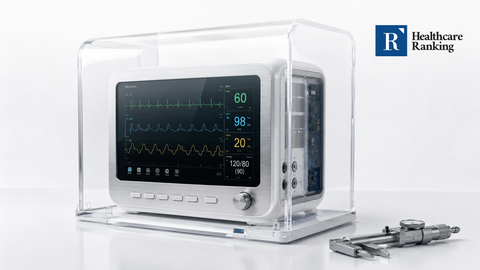
Medical device manufacturers are no longer judged only by hardware quality. Devices are increasingly connected to software, cloud platforms, analytics, remote monitoring systems, and longitudinal patient data. This trend is especially visible in diabetes technology, cardiovascular monitoring, implantable devices, neurotechnology, surgical equipment, respiratory devices, and hospital monitoring systems.
The shift changes the competitive model. A device company that historically competed through engineering, physician relationships, and regulatory execution must now also compete through software, cybersecurity, user experience, data integration, and service support. Devices increasingly generate data that can support clinical decision-making, care coordination, real-world evidence, predictive maintenance, and reimbursement discussions.
This evolution also raises new regulatory and operational challenges. Connected devices require cybersecurity protection, software updates, data privacy controls, interoperability standards, post-market surveillance, and clear responsibility when device data influences clinical decisions.
For Ranking News, Medical Device Manufacturers should be evaluated on product safety, clinical evidence, regulatory record, device reliability, physician adoption, connected-care capability, software quality, cybersecurity, and real-world performance.
3. Surgical Robotics and Advanced Equipment Enter a More Competitive Phase
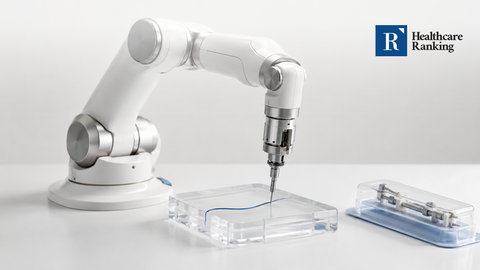
Surgical robotics and advanced procedural technologies remain among the most visible areas of medtech innovation. Robotic surgery, navigation systems, image-guided intervention, minimally invasive platforms, advanced imaging, and smart operating-room equipment are reshaping surgical practice.
The market, however, is becoming more competitive and more evidence-driven. Hospitals and surgical centers increasingly ask whether robotic systems improve outcomes, reduce length of stay, shorten recovery, improve surgeon ergonomics, increase procedural precision, or justify capital and operating costs. Technology adoption is no longer driven only by prestige or marketing. It must increasingly be supported by utilization, outcomes, training, and economic logic.
Surgical robotics also depends on ecosystem strength. The installed platform, instrument availability, service support, surgeon training, clinical data, hospital workflow integration, and specialty-specific applications all matter. A technically impressive system may fail commercially if it lacks procedural breadth, physician confidence, or hospital economics.
For Ranking News, Surgical Robotics & Advanced Equipment Firms should be evaluated on clinical outcomes, procedural breadth, installed base quality, surgeon adoption, training infrastructure, service reliability, capital efficiency, and evidence of measurable value.
4. Telemedicine Becomes Hybrid Care Infrastructure
Telemedicine is no longer merely a pandemic-era substitute for in-person care. In 2026, it is becoming part of hybrid care infrastructure. Virtual care is increasingly used for primary care access, behavioral health, chronic disease management, specialist follow-up, urgent care triage, second opinions, post-operative check-ins, employer health, rural access, and international consultations.
Digital health market commentary for 2026 describes telehealth as having evolved from a complementary service into a central pillar of modern healthcare delivery, supported by virtual consultations, remote diagnostics, and digital triage. Yet the sector’s future depends on integration, not volume alone.
The strongest telemedicine providers will be those that connect virtual care to physical care, diagnostics, prescriptions, referrals, records, follow-up, and escalation pathways. A video consultation without continuity may be convenient but clinically limited. Hybrid models are more valuable when they help patients access the right level of care at the right time.
For Ranking News, Telemedicine Providers should be evaluated on clinical quality, physician network quality, continuity of care, patient access, specialty depth, integration with diagnostics and in-person care, data security, and outcomes tracking.
5. Remote Monitoring and Wearables Shift Toward Chronic Care Management
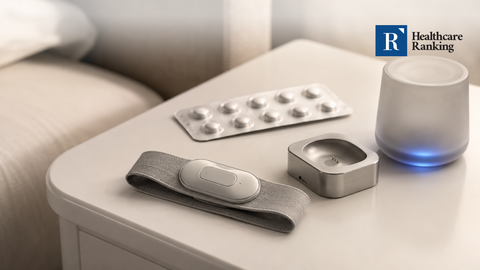
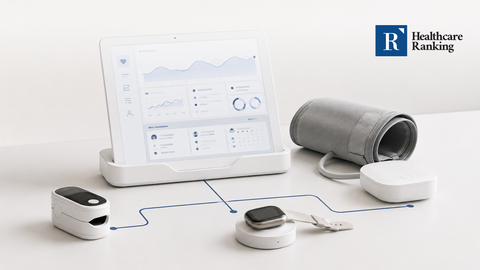
Remote monitoring and wearable health technologies are becoming more important as healthcare systems manage aging populations, chronic disease, workforce shortages, and cost pressure. Wearables and remote monitoring tools can support cardiovascular care, diabetes management, respiratory disease, sleep health, rehabilitation, maternal health, senior care, post-surgical recovery, and hospital-at-home models.
The challenge is moving from consumer data collection to clinically useful monitoring. Step counts, heart rate trends, glucose data, arrhythmia detection, blood pressure readings, oxygen saturation, sleep metrics, and activity patterns can be valuable, but only if they are reliable, interpreted appropriately, and integrated into care pathways.
Healthcare technology commentary for 2026 identifies patient-generated health data from wearables and cloud-based health systems among key trends, alongside AI clinical decision support and interoperability. This reinforces the idea that wearable data must become part of broader health infrastructure rather than isolated consumer dashboards.
For Ranking News, Remote Monitoring & Wearable Health Technology Providers should be evaluated on data accuracy, clinical validation, patient adherence, physician integration, alert quality, privacy, reimbursement support, and demonstrated impact on outcomes or utilization.
6. Hospital IT and Clinical Workflow Systems Become Productivity Infrastructure
Clinical workflow and hospital IT systems are becoming central to provider productivity. Hospitals and clinics face rising administrative burden, workforce shortages, revenue pressure, documentation demands, and patient access challenges. Technology that reduces friction can be strategically valuable. Technology that adds burden can damage trust.
In 2026, the most important areas include clinical documentation, scheduling, capacity management, revenue cycle automation, referral management, imaging workflow, medication safety, care coordination, patient messaging, and operational analytics. AI scribes, automated prior authorization support, digital intake, and workflow automation are especially relevant because they directly target clinician and administrative burden.
The key issue is usability. Healthcare organizations have long suffered from fragmented systems, poor interoperability, duplicated documentation, and difficult interfaces. The next generation of hospital IT must reduce complexity rather than merely digitize it.
For Ranking News, Clinical Workflow & Hospital IT Systems should be evaluated on usability, integration, clinician adoption, operational impact, implementation reliability, cybersecurity, revenue cycle performance, and ability to reduce administrative burden.
7. Interoperability and Health Data Infrastructure Become Strategic Foundations
Health data infrastructure is becoming one of the most important layers of care infrastructure. Without reliable data exchange, digital health remains fragmented. Patients repeat their histories, clinicians lack complete records, hospitals struggle to coordinate care, and AI systems operate on incomplete or biased data.
Deloitte’s 2026 healthcare outlook stresses that data is becoming a new form of infrastructure and that trust is becoming a core currency in healthcare transformation. Recent UK policy developments also show the strategic importance of integrated records, with proposed requirements for general practitioners and hospitals in England to share data in support of a single patient record.
Interoperability platforms must solve difficult problems: identity matching, data normalization, consent management, APIs, privacy, cybersecurity, analytics, audit trails, and cross-institutional trust. These are not merely technical challenges. They are governance challenges.
For Ranking News, Health Data Infrastructure & Interoperability Platforms should be evaluated on integration breadth, reliability, privacy, cybersecurity, standards compliance, usability, data governance, and ability to support real clinical workflows.
8. Digital Therapeutics and Consumer Health Technology Face a Credibility Test
Digital therapeutics and consumer health technology remain important, but the category is entering a credibility test. During earlier digital health cycles, many companies attracted attention through user growth, behavioral health apps, wellness platforms, remote coaching, chronic disease tools, and software-based interventions. In 2026, buyers increasingly want evidence, reimbursement logic, retention, clinical integration, and clear patient benefit.
Digital therapeutics may be relevant in diabetes prevention, obesity care, mental health, substance use, sleep, musculoskeletal care, rehabilitation, cardiovascular risk, and medication adherence. Consumer health platforms may support prevention, fitness, nutrition, women’s health, mental health, aging, and longitudinal wellness.
The strongest firms will distinguish themselves through clinical evidence, physician integration, payer partnerships, patient engagement, privacy protection, and measurable outcomes. Weak firms may struggle if they remain positioned as wellness apps without defensible clinical value.
For Ranking News, Digital Therapeutics & Consumer Health Technology Providers should be evaluated on evidence quality, engagement, clinical integration, regulatory status where applicable, privacy, reimbursement traction, and demonstrated patient outcomes.
Competitive Landscape
The Medical Technology, Digital Health & Care Infrastructure industry is highly segmented and increasingly convergent.
Medical device manufacturers compete through engineering quality, clinical evidence, regulatory approvals, physician relationships, manufacturing scale, and post-market safety. Their competitive advantage is increasingly tied to connected software and data integration.
Surgical robotics and advanced equipment firms compete on procedural precision, surgeon adoption, hospital economics, training, service support, and outcomes evidence. Their challenge is to justify high capital costs through measurable clinical and operational value.
Digital health platforms compete on usability, patient engagement, clinical workflow integration, payer relationships, scalability, and data infrastructure. Many platforms must prove they can move beyond pilots into durable health-system deployment.
Telemedicine providers compete on access, physician network quality, specialty coverage, convenience, continuity, and hybrid-care integration.
Remote monitoring and wearable health technology providers compete on sensor quality, patient adherence, clinical validation, disease-specific workflows, and integration with providers and payers.
Clinical workflow and hospital IT systems compete on enterprise integration, implementation reliability, user experience, cybersecurity, and measurable productivity improvement.
Health data infrastructure and interoperability platforms compete on data exchange capability, standards compliance, privacy, identity management, and trust across stakeholders.
Digital therapeutics and consumer health technology providers compete on evidence, engagement, personalization, reimbursement, and clinical credibility.
The result is a market where boundaries are blurring. Device companies increasingly behave like software companies. Digital health platforms increasingly require clinical services. Hospital IT vendors increasingly embed AI. Consumer health companies increasingly seek clinical validation. Rankings should therefore evaluate both category-specific excellence and cross-category integration.
Client Demand and Selection Criteria
Clients and stakeholders include hospitals, clinics, physicians, payers, employers, governments, patients, caregivers, pharmaceutical companies, research organizations, and investors.
Core selection criteria include:
- clinical utility;
- safety and regulatory credibility;
- workflow integration;
- interoperability;
- cybersecurity and privacy;
- physician and patient adoption;
- measurable outcomes;
- real-world evidence;
- implementation reliability;
- cost-effectiveness;
- reimbursement compatibility;
- operational efficiency;
- training and support;
- scalability;
- patient experience;
- governance and trust.
Hospitals may emphasize workflow, integration, cybersecurity, and return on investment. Physicians may emphasize usability, evidence, liability protection, and reduced burden. Patients may emphasize convenience, affordability, privacy, and trust. Payers may emphasize outcomes and cost control. Regulators may emphasize safety, transparency, and post-market surveillance.
This diversity supports Ranking News’ multi-category structure. Medical devices, robotics, telemedicine, remote monitoring, hospital IT, interoperability, digital therapeutics, and consumer health technology should not be evaluated by identical criteria. Each category plays a different role in the healthcare infrastructure stack.
Methodological Implications for Ranking
The 2026 outlook suggests that Ranking News should evaluate Medical Technology, Digital Health & Care Infrastructure firms across clinical, technical, operational, and institutional dimensions.
Relevant ranking factors include:
- clinical evidence and outcomes;
- product safety and reliability;
- regulatory track record;
- physician adoption;
- patient adoption and engagement;
- workflow integration;
- interoperability;
- cybersecurity and privacy;
- real-world evidence;
- implementation success;
- scalability;
- cost-effectiveness;
- data governance;
- technology differentiation;
- service and training infrastructure;
- institutional trust.
For the category structure, the methodology may be differentiated as follows:
Medical Device Manufacturers should be evaluated on safety, clinical evidence, regulatory history, device reliability, manufacturing quality, connected-care capability, and physician adoption.
Surgical Robotics & Advanced Equipment Firms should be evaluated on clinical outcomes, procedural breadth, platform reliability, surgeon training, service support, hospital economics, and evidence of value.
Digital Health Platforms should be evaluated on user experience, care coordination, provider integration, scalability, data security, patient engagement, and measurable operational or clinical impact.
Telemedicine Providers should be evaluated on access, physician network quality, continuity of care, specialty depth, patient experience, privacy, and integration with physical care pathways.
Remote Monitoring & Wearable Health Technology Providers should be evaluated on sensor accuracy, clinical validation, patient adherence, alert quality, provider integration, privacy, and disease-management outcomes.
Clinical Workflow & Hospital IT Systems should be evaluated on usability, interoperability, implementation reliability, clinician adoption, revenue cycle impact, cybersecurity, and administrative burden reduction.
Health Data Infrastructure & Interoperability Platforms should be evaluated on standards compliance, data exchange breadth, identity management, consent governance, privacy, cybersecurity, and clinical workflow support.
Digital Therapeutics & Consumer Health Technology Providers should be evaluated on clinical evidence, engagement, personalization, regulatory status where relevant, reimbursement traction, privacy, and patient outcomes.
For Ranking News, the key question is not simply which companies have the most advanced technology. The more important question is which organizations help healthcare systems deliver safer, more efficient, more accessible, and more coordinated care.
Outlook for the Year Ahead
Medical Technology, Digital Health & Care Infrastructure will remain a high-priority sector throughout 2026. Healthcare systems face cost pressure, labor shortages, aging populations, chronic disease, administrative burden, and patient demand for better access. Technology is increasingly viewed as part of the solution, but only when it is clinically useful and operationally reliable.
AI will continue to shape the sector, especially in imaging, documentation, workflow automation, monitoring, triage, and hospital operations. However, AI adoption will remain governed by trust, safety, validation, and liability concerns. The market will increasingly distinguish between tools that genuinely improve care delivery and tools that merely add another digital layer.
Devices and robotics will continue to evolve toward connected platforms. Telemedicine will become more embedded in hybrid care models. Remote monitoring and wearables will gain relevance in chronic care and hospital-at-home models. Hospital IT and interoperability platforms will become foundational to care coordination and AI readiness. Digital therapeutics and consumer health technology will need stronger evidence and clearer integration with clinical care.
The strongest firms in 2026 will be those that combine innovation with implementation discipline. Healthcare buyers will reward companies that reduce burden, improve outcomes, integrate with existing systems, protect data, and demonstrate economic value.
Concluding Remarks
The 2026 Medical Technology, Digital Health & Care Infrastructure outlook reflects a sector moving from fragmented innovation toward institutional infrastructure. The industry’s role is no longer limited to devices, apps, or software tools. It increasingly determines how care is accessed, delivered, monitored, documented, coordinated, and improved.
For Ranking News, this sector should be treated as one of the most important healthcare ranking areas. Medical technology and digital health firms shape clinical productivity, surgical capability, patient access, data infrastructure, chronic disease management, and the future operating model of healthcare systems.
Ranking News’ annual ranking of Medical Technology, Digital Health & Care Infrastructure firms should therefore be read not only as a list of leading companies, but as a reflection of the broader structural changes shaping AI-enabled care, connected devices, robotic surgery, virtual health, remote monitoring, health data infrastructure, and digital-first healthcare delivery in 2026.
Review categories
- Medical Device Manufacturers
- Surgical Robotics & Advanced Equipment Firms
- Digital Health Platforms
- Telemedicine Providers
- Remote Monitoring & Wearable Health Technology Providers
- Clinical Workflow & Hospital IT Systems
- Health Data Infrastructure & Interoperability Platforms
- Digital Therapeutics & Consumer Health Technology Providers
[email protected]