Top 20 Digital Health Platforms 2026

Review categories
- Medical Device Manufacturers
- Surgical Robotics & Advanced Equipment Firms
- Digital Health Platforms
- Telemedicine Providers
- Remote Monitoring & Wearable Health Technology Providers
- Clinical Workflow & Hospital IT Systems
- Health Data Infrastructure & Interoperability Platforms
- Digital Therapeutics & Consumer Health Technology Providers
[email protected]
Authored On
Modified
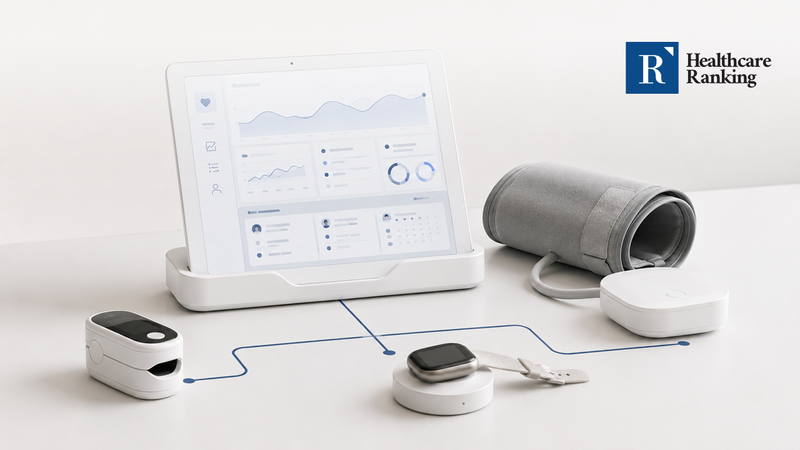
This report forms part of the Ranking News Healthcare Ranking series, which evaluates hospitals, medical institutions, pharmaceutical organizations, medical technology companies, diagnostics providers, laboratories, precision medicine platforms, pharmaceutical services providers, medical technology firms, and healthcare systems across global healthcare markets.
Digital health platforms occupy a central role in the modernization of healthcare delivery. These firms use software, virtual care, data infrastructure, connected devices, care navigation, AI-enabled workflows, remote monitoring, digital therapeutics, and patient engagement tools to extend healthcare beyond traditional hospitals and clinics.
Unlike conventional medical device manufacturers or provider groups, digital health platforms compete through scalable software infrastructure, clinical workflow integration, employer and payer relationships, patient experience, clinician networks, data security, regulatory compliance, and measurable care outcomes. Their institutional relevance is determined not only by user volume, but also by clinical credibility, enterprise adoption, reimbursement alignment, data interoperability, and ability to support care delivery at scale.
The sector has moved beyond pandemic-era telehealth adoption. In 2026, the strongest digital health platforms are no longer simple video-visit companies. They combine virtual primary care, specialist access, behavioral health, chronic disease management, musculoskeletal care, women’s and family health, benefits navigation, clinical decision support, and data-enabled patient engagement. The global telemedicine and digital health market was estimated at approximately $85.5 billion in 2025 and projected by one market report to reach $180 billion by 2031, reflecting continued demand for virtual care, remote monitoring, and AI-enabled healthcare technologies.
This ranking identifies digital health platforms whose businesses demonstrate sustained relevance across virtual care, clinical navigation, chronic disease management, provider enablement, patient access, employer benefits, and digital infrastructure. Rather than focusing only on consumer app visibility, the objective is to recognize firms whose platforms are structurally important to healthcare delivery and commercially relevant as licensing targets.
Market Overview
The digital health platform market includes several distinct but overlapping categories. The first is broad virtual care, where companies such as Teladoc Health, Amwell, MDLIVE, Included Health, and Doctor On Demand support telemedicine, virtual primary care, behavioral health, and enterprise virtual care programs. Teladoc remains one of the most globally recognized virtual care companies, though recent financial results show that growth in broad telehealth has become more mature and competitive.
The second category is provider and clinical workflow platforms. Doximity is one of the strongest examples, positioning itself as the leading digital platform for U.S. medical professionals. It reported that its network includes more than 85% of U.S. physicians, while its fiscal 2026 results highlighted record engagement across newsfeed, workflow, and AI products.
The third category is condition-specific digital care. Hinge Health, Omada Health, Maven Clinic, Headspace, Spring Health, Sword Health, and Twin Health reflect the movement from general virtual visits toward focused care models addressing musculoskeletal disease, metabolic disease, women’s and family health, mental health, obesity, diabetes, and chronic care. Hinge Health and Omada Health helped reopen the digital health IPO market in 2025, after a long drought in public listings for the sector.
The fourth category is marketplace and access infrastructure. Zocdoc, GoodRx, Hims & Hers, Ro, and similar firms help patients find care, access prescriptions, compare prices, manage conditions, or interact with clinicians through digital-first channels. These platforms sit between healthcare delivery, consumer engagement, and pharmacy access.
The fifth category is remote care and digital infrastructure. Companies such as Cadence, Current Health, Huma, Health Catalyst, and Xealth support remote patient monitoring, clinical data integration, hospital-at-home workflows, population health, and digital health orchestration. These firms are especially relevant as health systems try to integrate digital programs into clinical operations rather than manage them as disconnected apps.
Industry Trend — 2026
The digital health platform industry in 2026 is shaped by five major trends: post-telehealth consolidation, AI-enabled care operations, condition-specific platforms, employer and payer integration, and clinical proof requirements.
First, digital health is moving beyond generic telemedicine. Simple video visits have become commoditized, while higher-value platforms increasingly combine longitudinal care, specialist networks, coaching, data integration, navigation, and measurable outcomes. Broad virtual care companies must now prove that they can manage total cost of care, not merely provide convenient access.
Second, AI is becoming embedded in clinician and care-team workflows. Doximity reported strong adoption of AI products among clinicians, while Hinge Health describes its care model as AI-powered and supported by wearable devices and expert clinicians. AI is increasingly used for documentation, triage, care navigation, patient engagement, clinical workflow automation, and operational efficiency.
Third, condition-specific digital care remains a major growth area. Musculoskeletal care, metabolic health, obesity, diabetes, mental health, women’s health, fertility, menopause, cardiovascular monitoring, and chronic kidney disease are particularly important because they involve high employer and payer costs. Omada’s 2026 results highlighted 42% year-over-year revenue growth and membership above one million, supported by virtual chronic care and GLP-1-related programs.
Fourth, employer, payer, and health-system distribution remain critical. Many digital health companies sell through employers, insurers, health plans, health systems, or benefits platforms rather than relying only on individual consumers. Maven Clinic’s Series F financing, for example, emphasized investment in fertility benefits administration and virtual care delivery, reflecting the importance of employer and payer channels in women’s and family health.
Fifth, clinical validation and ROI are becoming more important. The strongest digital health platforms increasingly need to show lower costs, better outcomes, higher engagement, reduced avoidable utilization, or improved access. Investors, employers, payers, and health systems have become more selective, especially after the funding correction in digital health.
Methodology — Core Eligibility Criteria
To ensure structural consistency within the category, organizations considered for this ranking were evaluated based on the following eligibility conditions:
- Operates as a digital health platform, virtual care company, care navigation platform, digital therapeutics provider, remote monitoring platform, clinical workflow platform, healthcare marketplace, or technology-enabled care delivery firm
- Provides services such as telehealth, virtual primary care, behavioral health, chronic disease management, remote monitoring, digital musculoskeletal care, women’s health, benefits navigation, provider workflow tools, prescription access, or patient engagement
- Maintains meaningful institutional scale through enterprise clients, employer contracts, payer relationships, provider networks, physician adoption, patient volume, public market presence, or global platform reach
- Demonstrates relevance in healthcare access, care coordination, clinical workflow, chronic disease management, virtual care, consumer health, or digital care infrastructure
- Represents a specific license-targetable operating organization, rather than a broad ecosystem category, industry association, informal network, or generic platform label
Pure wellness apps, fitness-only platforms, non-clinical lifestyle brands, software vendors without meaningful healthcare deployment, hospital systems without standalone digital health platform identity, and early-stage startups without sufficient scale were generally excluded.
Methodology — Ranking Factors
Organizations included in the ranking were evaluated using a combination of qualitative and structural considerations rather than short-term valuation alone. Key factors considered include:
- Scale and maturity of digital health platform
- Clinical relevance and breadth of care services
- Employer, payer, health-system, provider, or consumer adoption
- Strength of virtual care, chronic care, navigation, behavioral health, or workflow capabilities
- Evidence of outcomes, cost savings, engagement, or care quality improvement
- AI, data infrastructure, interoperability, and workflow integration
- Regulatory compliance, privacy, clinical governance, and patient safety
- Institutional stability, brand reputation, and long-term platform resilience
The objective of the ranking is to identify digital health platforms whose businesses maintain sustained relevance within the global healthcare ecosystem.
The Healthcare Ranking Top 20 Digital Health Platforms 2026 ranking evaluates companies based on virtual care scale, platform relevance, clinical integration, enterprise adoption, patient access, technology infrastructure, and long-term institutional resilience.
The ranking universe consisted of approximately 150 digital health platforms globally, from which 20 organizations were selected for inclusion.
Tier classifications reflect relative institutional positioning within the digital health platform sector and do not represent clinical recommendations, procurement advice, investment recommendations, or endorsement of any specific digital health service.
Tier I — Leading Global Digital Health Platforms
Teladoc Health
- Headquarters: Purchase, United States
- Founded: 2002
- Core focus: Virtual care, telehealth, chronic care, mental health, enterprise healthcare access
Teladoc Health remains one of the most recognized digital health platforms globally and one of the defining companies in virtual care. Its platform spans telemedicine, virtual primary care, mental health, chronic condition management, specialist access, and enterprise healthcare solutions.
Teladoc’s strength lies in scale and category recognition. It helped define virtual care as an enterprise healthcare category and continues to serve employers, health plans, providers, and consumers across multiple care needs. Its breadth gives it relevance beyond urgent care video visits, particularly in mental health, chronic disease support, and integrated virtual care.
The company also illustrates the maturing of the digital health market. Broad telehealth has become more competitive and lower-growth than during the pandemic period, and Teladoc has had to manage pressure around profitability, growth expectations, and strategic focus. Its Q4 2025 results showed only modest year-over-year revenue growth, reflecting this more mature environment.
Despite these challenges, Teladoc’s brand, global reach, enterprise relationships, care breadth, and long-standing virtual care infrastructure support its position as a Tier I digital health platform in 2026.
Doximity
- Headquarters: San Francisco, United States
- Founded: 2010
- Core focus: Physician network, clinical workflow tools, telehealth, medical news, AI tools
Doximity is one of the most important digital health platforms because it is deeply embedded in physician workflow and professional engagement. Rather than focusing primarily on patient-facing telehealth, Doximity operates as a digital platform for medical professionals, supporting communication, clinical workflow tools, telehealth, hiring, medical news, and AI-enabled productivity.
Doximity’s strength lies in physician adoption. The company has stated that its network includes more than 85% of U.S. physicians across specialties and practice areas, giving it one of the most valuable professional networks in healthcare technology. Its fiscal 2026 results also highlighted strong engagement, including more than one million quarterly active prescribers in its newsfeed and more than 300,000 users of nascent AI products.
The platform is especially relevant because clinician workflow remains a major bottleneck in healthcare. Digital tools that reduce communication friction, support telehealth, help physicians manage professional information, and integrate AI into daily work can create durable value.
Doximity’s physician network, profitability profile, workflow adoption, AI engagement, and strong brand among clinicians support its position as a Tier I digital health platform.
Hinge Health
- Headquarters: San Francisco, United States
- Founded: 2014
- Core focus: Digital musculoskeletal care, virtual physical therapy, AI-enabled care, wearable-supported rehabilitation
Hinge Health is one of the leading condition-specific digital health platforms, focused on musculoskeletal care, chronic pain, virtual physical therapy, and movement health. It has become one of the most important examples of a digital care company moving beyond telehealth into structured, outcomes-oriented virtual specialty care.
Hinge Health’s strength lies in its focused clinical category. Musculoskeletal conditions represent a major cost burden for employers and health plans, and many patients require long-term therapy, behavioral support, exercise adherence, pain management, and care navigation. Hinge’s model combines AI-powered care, wearable devices, expert clinicians, and evidence-based programs to address these needs.
The company’s public-market debut in 2025 also made it a bellwether for the digital health sector. Hinge was one of the first major digital health IPOs after a difficult funding period, and its reported growth and public-company transition gave investors a clearer benchmark for condition-specific virtual care.
Hinge Health’s category leadership in digital MSK, employer and payer relevance, AI-enabled model, and public-company profile support its Tier I position.
Omada Health
- Headquarters: San Francisco, United States
- Founded: 2011
- Core focus: Virtual chronic care, diabetes, hypertension, obesity, GLP-1 support, cardiometabolic health
Omada Health is one of the most important digital chronic care platforms, focused on cardiometabolic disease, diabetes prevention, diabetes management, hypertension, obesity, behavioral change, and GLP-1-related care support. Its model reflects the growing demand for digital platforms that manage expensive chronic conditions between traditional office visits.
Omada’s strength lies in chronic care delivery. Employers and health plans face major costs from diabetes, obesity, hypertension, and related metabolic disease. Omada provides a virtual care model that combines coaching, connected devices, clinical programs, and data-driven engagement to support patients over time.
The company’s 2026 results show continued growth. Omada reported Q1 2026 revenue growth of 42% year-over-year, membership of approximately 1.02 million, improved profitability metrics, and raised full-year guidance. Its partnership with Eli Lilly around GLP-1 support further reinforces its relevance in the fast-growing obesity and metabolic care ecosystem.
Omada’s chronic disease focus, employer and payer model, GLP-1 care relevance, public-company profile, and virtual between-visit care platform support its position among leading digital health platforms.
Included Health
- Headquarters: San Francisco, United States
- Founded: 2020 through combination of Grand Rounds Health and Doctor On Demand
- Core focus: Virtual care, care navigation, primary care, behavioral health, employer health benefits
Included Health is a leading digital health platform combining virtual care, navigation, primary care, behavioral health, specialist guidance, and benefits support. The company is especially relevant for employers and health plans seeking to simplify healthcare access for members and employees.
Included Health’s strength lies in integrated navigation. Many healthcare problems are not only clinical but also logistical: patients struggle to identify the right provider, understand benefits, access virtual care, manage specialty referrals, and coordinate complex care. Included Health’s platform addresses this access and navigation layer.
The company’s structure, combining Doctor On Demand’s virtual care capabilities with Grand Rounds’ navigation and expert opinion model, gives it a broad enterprise-facing digital health platform. This makes it relevant in a market shifting from standalone telehealth toward navigation-enabled care delivery.
Included Health’s virtual care breadth, employer channel, benefits-navigation model, and integrated care platform support its Tier I position.
Tier II — Established Digital Health Platforms
(Alphabetical order)
Amwell
- Headquarters: Boston, United States
- Founded: 2006
- Core focus: Enterprise telehealth, health-system virtual care, white-label virtual care infrastructure
Amwell is one of the most established enterprise telehealth and virtual care infrastructure companies. Its platform supports health systems, payers, employers, and providers seeking branded or integrated virtual care capabilities.
Amwell’s strength lies in health-system and enterprise deployment. Unlike consumer-first telehealth companies, Amwell has historically focused on enabling organizations to deliver virtual care through their own brands and workflows. This makes it especially relevant for hospitals and health plans that want virtual care infrastructure rather than a fully external care marketplace.
The company operates in a competitive environment and has faced financial and strategic pressure, but its platform remains important within enterprise virtual care. Its long history, payer and health-system relationships, and white-label infrastructure support its inclusion among established digital health platforms.
Doctolib
- Headquarters: Paris, France
- Founded: 2013
- Core focus: Digital appointment booking, teleconsultation, provider workflow, European healthcare access
Doctolib is one of Europe’s most important digital health platforms. It provides appointment booking, teleconsultation, patient communication, provider workflow tools, and practice management support across major European healthcare markets.
Doctolib’s strength lies in market penetration and workflow integration. In Europe, patient access often depends on finding appointments, communicating with physicians, managing reminders, and coordinating healthcare interactions across fragmented provider systems. Doctolib has built a strong platform around this access layer.
The company is particularly relevant in France and Germany, where it has become one of the best-known digital health brands. Its model is less about direct clinical care delivery and more about digitizing access to physicians and healthcare practices.
Doctolib’s European scale, appointment infrastructure, provider workflow relevance, and strong consumer recognition support its inclusion among established digital health platforms.
GoodRx
- Headquarters: Santa Monica, United States
- Founded: 2011
- Core focus: Prescription price comparison, pharmacy access, telehealth, consumer medication savings
GoodRx is a major consumer digital health platform focused on prescription affordability, pharmacy access, medication price comparison, telehealth, and consumer healthcare navigation. Its platform helps patients compare drug prices, find discounts, and access selected virtual care and prescription services.
GoodRx’s strength lies in consumer utility. Prescription costs and pharmacy access remain major pain points in the U.S. healthcare system. GoodRx built a widely recognized brand by helping patients reduce out-of-pocket medication costs and navigate fragmented pricing.
The company’s relevance extends beyond coupons. Its platform connects consumers, pharmacies, pharmaceutical manufacturers, telehealth services, and medication access programs. This places GoodRx at the intersection of digital health, pharmacy benefit complexity, and consumer healthcare decision-making.
GoodRx’s brand recognition, consumer reach, pharmacy access infrastructure, and medication affordability focus support its inclusion among established digital health platforms.
Grow Therapy
- Headquarters: New York, United States
- Founded: 2020
- Core focus: Mental health provider network, therapy access, insurance-enabled behavioral health, AI-supported engagement
Grow Therapy is a fast-growing digital mental health platform that connects patients with therapists and supports insurance-covered behavioral healthcare access. The company has become one of the most visible newer mental health platforms, combining provider network growth, payer relationships, and AI-supported patient engagement.
Grow Therapy’s strength lies in mental health access and payer integration. Behavioral healthcare demand remains high, but patients frequently face access barriers, cost barriers, and provider-network fragmentation. Grow’s model is built around connecting patients with clinicians while working with insurers and employers.
Financial Times reporting described Grow Therapy as reaching $617.4 million in 2024 revenue, with a valuation around $3 billion and a compound annual growth rate of 455.6% in The Americas’ Fastest-Growing Companies 2026 ranking.
Grow Therapy’s rapid growth, behavioral health focus, insurance-enabled model, and platform-based therapist network support its inclusion among established digital health platforms.
Headspace
- Headquarters: Santa Monica, United States
- Founded: 2010
- Core focus: Mental health, meditation, coaching, therapy, digital behavioral health
Headspace is one of the most recognized digital mental health platforms globally. The company began as a meditation and mindfulness app and expanded into broader behavioral health through coaching, therapy, psychiatry-adjacent services, employer programs, and health-plan partnerships.
Headspace’s strength lies in brand recognition and behavioral health engagement. Mental health remains one of the most important categories in digital health, and patients often need low-friction access to support before, between, or alongside formal clinical care.
The company operates in a highly competitive mental health market that includes Spring Health, Grow Therapy, Talkspace, Lyra Health, Rula, and others. However, Headspace’s consumer brand, employer presence, and content-driven engagement remain valuable assets.
Headspace’s behavioral health focus, brand strength, employer relevance, and digital engagement platform support its inclusion among established digital health platforms.
Hims & Hers Health
- Headquarters: San Francisco, United States
- Founded: 2017
- Core focus: Consumer telehealth, digital pharmacy, sexual health, dermatology, mental health, weight management
Hims & Hers Health is one of the most important consumer digital health platforms, providing telehealth access, prescription services, digital pharmacy, mental health support, dermatology, sexual health, hair loss treatment, and weight management programs.
The company’s strength lies in consumer brand, convenience, and direct-to-patient care. Hims & Hers has built a digital-first model around conditions that patients often prefer to manage privately and conveniently. Its platform combines online intake, clinician review, prescriptions, pharmacy fulfillment, and recurring care programs.
The company has expanded into weight management and lab testing, reflecting a broader move toward longitudinal consumer healthcare rather than one-off prescriptions. Recent reporting described its expansion into lab testing through a Quest Diagnostics partnership, offering biomarker-based subscription tiers.
Hims & Hers’ consumer reach, digital pharmacy infrastructure, telehealth model, and expansion into broader preventive and chronic care support its position among established digital health platforms.
Maven Clinic
- Headquarters: New York, United States
- Founded: 2014
- Core focus: Women’s health, fertility, maternity, family health, menopause, employer benefits
Maven Clinic is one of the leading digital health platforms in women’s and family health. Its services include fertility, pregnancy, maternity, postpartum care, parenting, pediatrics, menopause, and related benefits administration for employers and health plans.
Maven’s strength lies in a focused and underserved category. Women’s and family health includes major clinical, financial, and workplace needs that traditional healthcare systems often handle poorly. Maven combines virtual care, care navigation, specialist access, education, and benefits support into a platform aimed at employers and payers.
The company announced a $125 million Series F round in 2024, bringing total funding to more than $425 million and supporting investment in fertility benefits administration and virtual care delivery. This funding reinforced its position as one of the most important private digital health platforms.
Maven Clinic’s category leadership, employer channel, women’s health focus, and global virtual care model support its inclusion among established digital health platforms.
Ro
- Headquarters: New York, United States
- Founded: 2017
- Core focus: Direct-to-consumer telehealth, weight management, sexual health, dermatology, fertility, digital pharmacy
Ro is a major consumer digital health platform providing telehealth, online prescriptions, pharmacy fulfillment, diagnostics-adjacent services, sexual health, dermatology, fertility-related services, and weight management. The company has positioned itself around direct-to-patient access and digital care convenience.
Ro’s strength lies in consumer healthcare infrastructure. It combines online intake, clinician review, pharmacy fulfillment, lab or diagnostic coordination in selected areas, and ongoing care programs. This gives it relevance in categories where patients value privacy, speed, and direct access.
Its move into obesity and GLP-1-related care has increased its relevance within one of the most important consumer health categories of 2026. However, the company competes in a crowded market with Hims & Hers, WeightWatchers Clinic, Found, Noom, Omada, and traditional providers.
Ro’s direct-to-consumer healthcare model, digital pharmacy infrastructure, weight management focus, and brand recognition support its inclusion among established platforms.
Spring Health
- Headquarters: New York, United States
- Founded: 2016
- Core focus: Employer mental health, behavioral health navigation, therapy, coaching, precision mental healthcare
Spring Health is a leading employer-focused mental health platform offering therapy, coaching, care navigation, medication management support, and behavioral health programs. It is part of the broader movement toward workplace mental health as a core employee benefit.
Spring Health’s strength lies in enterprise behavioral health. Employers increasingly require mental health platforms that offer rapid access, measurement-based care, diverse provider networks, and support across acuity levels. Spring Health positions itself around personalized care matching and outcomes-oriented mental health support.
The company competes with Headspace, Lyra Health, Grow Therapy, Talkspace, Rula, Modern Health, and other behavioral health platforms, but remains one of the most recognized employer-focused providers.
Spring Health’s employer relationships, behavioral health specialization, care navigation model, and platform maturity support its inclusion among established digital health platforms.
Zocdoc
- Headquarters: New York, United States
- Founded: 2007
- Core focus: Healthcare marketplace, appointment booking, provider discovery, patient access
Zocdoc is one of the most established healthcare marketplace platforms, focused on helping patients find providers, compare appointment availability, book visits, and access care more conveniently. Its platform includes both in-person and virtual visit access across a wide range of specialties.
Zocdoc’s strength lies in patient access infrastructure. Many healthcare systems remain difficult for patients to navigate, with fragmented provider directories, long wait times, and limited transparency. Zocdoc addresses this problem by creating a consumer-facing marketplace for appointment discovery and booking.
The company is not primarily a care delivery company, but its role in access and scheduling makes it structurally important within digital health. It supports both patients seeking care and providers seeking patient acquisition and scheduling efficiency.
Zocdoc’s brand recognition, appointment marketplace model, provider network, and long-standing patient access platform support its inclusion among established digital health platforms.
Tier III — Specialist Digital Health Platforms
(Alphabetical order)
Cadence
- Headquarters: New York, United States
- Founded: 2021
- Core focus: Remote patient monitoring, chronic disease management, health-system virtual care
Cadence is a specialist digital health platform focused on remote patient monitoring and chronic disease management. Its model supports patients with conditions such as hypertension, diabetes, heart failure, and chronic obstructive pulmonary disease through connected devices, clinical monitoring, and care-team support.
Cadence’s strength lies in health-system integration. Remote patient monitoring becomes more valuable when it is embedded into provider workflows and connected to clinical escalation pathways rather than functioning as a standalone app.
Its focus on chronic disease, connected care, and hospital-partnered remote monitoring supports its Tier III inclusion.
Health Catalyst
- Headquarters: South Jordan, United States
- Founded: 2008
- Core focus: Healthcare data analytics, population health, clinical improvement, health-system intelligence
Health Catalyst is a healthcare data and analytics platform serving health systems, payers, and healthcare organizations. Its tools support data integration, population health analytics, clinical improvement, financial performance, quality measurement, and operational intelligence.
Health Catalyst’s strength lies in enterprise healthcare data infrastructure. Digital health does not only mean telehealth; health systems also need analytics platforms that turn clinical, financial, and operational data into actionable insights.
The company’s health-system focus, analytics infrastructure, and clinical improvement orientation support its inclusion as a specialist digital health platform.
Huma
- Headquarters: London, United Kingdom
- Founded: 2011
- Core focus: Remote monitoring, digital clinical trials, decentralized care, hospital-at-home support
Huma is a digital health platform focused on remote patient monitoring, decentralized clinical trials, digital biomarkers, and care-at-home models. Its platform supports health systems, pharmaceutical companies, and research organizations seeking to manage patients or trial participants outside traditional facilities.
Huma’s strength lies in remote monitoring and regulated digital health infrastructure. It operates in areas where digital tools must meet clinical and regulatory expectations, including chronic disease monitoring, clinical research, and hospital-at-home workflows.
Its international reach, remote care platform, and clinical trial relevance support its Tier III inclusion.
Sword Health
- Headquarters: Draper, United States / Porto, Portugal
- Founded: 2015
- Core focus: Digital musculoskeletal care, AI care delivery, virtual physical therapy
Sword Health is a specialist digital musculoskeletal care platform competing in virtual physical therapy, chronic pain, movement health, and AI-supported care delivery. The company serves employers, health plans, and members seeking alternatives to traditional physical therapy and unnecessary musculoskeletal spending.
Sword’s strength lies in its AI-enabled MSK model and focus on reducing musculoskeletal costs. Like Hinge Health, it targets a large and expensive category for employers and insurers, but remains privately held and more specialist in profile.
Its digital physical therapy platform, AI-driven care model, and employer-focused distribution support its Tier III inclusion.
Twin Health
- Headquarters: Mountain View, United States
- Founded: 2018
- Core focus: Metabolic health, diabetes reversal, digital twin technology, chronic disease management
Twin Health is a specialist digital health platform focused on metabolic disease and diabetes care using digital twin technology, connected devices, coaching, and personalized recommendations. The company’s model is designed to improve metabolic health by continuously analyzing patient data and guiding behavior and clinical decisions.
Twin Health’s strength lies in its chronic disease focus and data-intensive model. Diabetes and metabolic disease are among the largest cost drivers in healthcare, and platforms that can demonstrate durable improvement in glycemic control, weight, and medication use may have significant payer and employer relevance.
Its metabolic health specialization, connected data model, and digital twin positioning support its inclusion among specialist digital health platforms.
Remarks
Digital health platforms continue to reshape healthcare by improving access, supporting virtual care, extending chronic disease management, enabling provider workflow, strengthening behavioral health, and helping patients navigate fragmented healthcare systems. The category now extends well beyond basic telehealth into condition-specific care, clinical workflow, employer benefits, pharmacy access, remote monitoring, and healthcare data infrastructure.
The organizations recognized in this ranking represent firms whose platforms maintain sustained relevance across virtual care, care navigation, chronic disease management, mental health, women’s health, physician workflow, consumer access, digital pharmacy, remote monitoring, and healthcare analytics. Tier classification reflects relative institutional positioning within the digital health platform sector rather than direct clinical quality rankings.
Tier classification reflects relative platform scale, clinical relevance, enterprise adoption, user engagement, care delivery maturity, technology infrastructure, AI integration, outcomes orientation, and long-term resilience. The ranking does not constitute a medical recommendation, procurement recommendation, investment recommendation, or endorsement of any specific digital health service.
Recognition
Organizations included in the Top 20 Digital Health Platforms 2026 ranking may request information regarding authorized use of the Ranking News designation for marketing and communications purposes.
Recognized institutions may reference the designation in:
- corporate websites
- investor communications
- marketing materials
- institutional presentations
- academic and recruitment materials
Ranking inclusion is editorially determined and independent of licensing, advertising, or commercial participation. Recognition-materials licenses govern only the use of official Ranking News / Healthcare Ranking assets, approved wording, and related communications materials.
Licensing inquiries:
[email protected]

Review categories
- Medical Device Manufacturers
- Surgical Robotics & Advanced Equipment Firms
- Digital Health Platforms
- Telemedicine Providers
- Remote Monitoring & Wearable Health Technology Providers
- Clinical Workflow & Hospital IT Systems
- Health Data Infrastructure & Interoperability Platforms
- Digital Therapeutics & Consumer Health Technology Providers
[email protected]